"Schlaraffenland", the German Arcadia.

Saturday, August 08, 2026

Thursday, August 16, 2018

Going Overboard

It didn't make a sound. My phone sliced through the surface of the canal like an Olympic diver scoring a perfect 10. The canal was the colour and density of a cafe mocha, so the phone instantly disappeared from view. I gaped at the water for a long moment, slowly processing what had just happened.
1) The roof of the canal-boat was curved.
2) My phone - new and expensive I might add - was constructed of smoothest glass.
3) I had set said smooth phone on said curved roof.
4) The laws of physics were fully operational on the Oxford Canal.
Curve + smooth + physics = miniature luge run.

And so it went. Later when asked the obvious question, my excuse was that I was still jet-lagged and that I was exhausted after having been woken up at 3:00 am by a disoriented child, after which I couldn't fall asleep again. My other excuse was that everything about the boat and about the canal was new and unfamiliar. The deeper truth is more simply that sometimes I do foolish things.

Once my brain came back online I grabbed the barge-pole and quickly tested the depth of the water. About three feet. We were tied up along the side of the canal with about a two foot gap between the shore and the stern of the boat where I was. It was into this gap that my phone so elegantly dove. I jumped in, bracing for what I figured would be a muddy bottom. I was wrong, it was soft ooze rather than mud - a shin-deep layer of gradual transition from liquid to solid. I had never felt anything quite like it. It felt almost fluffy, but not in a good way. Occasionally the ooze would be punctuated by something hard and angular jutting up. Stone? Wood? Bone? Hard to say. Worse were the mysterious objects that felt crunchy. I felt around with my feet and with my hands. Nothing. Lorraine and the kids were way up at the bow, almost 60 feet away. I feebly called "help" a couple times, but I felt self-conscious about hollering continuously for them as there were occasional passers-by on the adjacent tow path. As they strolled by and glanced at me, their English reserve no doubt masking puzzlement and concern, I would smile and nod as if to indicate, "Yup, just thrashing about in the canal for fun!" In any case, I'm not sure what Lorraine could have done to assist me, other than perhaps loosen the lines as I was beginning to suspect that the phone had slipped down under the keel.

This unique way of spending a warm summer's evening in the English countryside occupied me for a good twenty minutes before my right big toe suddenly encountered an unnaturally smooth object, deep in the ooze, under the stern of the boat. My phone! I pulled it out, dripping in slime, and pressed the "on" key. It was alive! I reached onto the stern and placed the phone in a secure spot (yes! secure!) and then tried to clamber aboard. I was tired, I was wet, I was slimy, I was spastic. I could not haul myself back up. But no problem, the shore was lower than the boat and also offered much better hand holds with the firmer mud and the greenery. I dragged myself onto land, took a few deep breaths and then let a feeling of elation wash over me. I had done it! Even when it seemed futile, I had persisted and I had triumphed! This feeling of elation was immediately followed by an even stronger feeling of my skin being on fire. Wet, but on fire. Bizarre. From my feet, up my legs, to my chest and on my arms and hands, millions of nerve endings suddenly joined in a simultaneous chorus of, "Burning! Burning! Burning!" Here followed another moment of gaping at my surroundings, uncomprehending, until my brain was able to process what had happened.

Stinging nettle.
All that greenery on the canal-side was stinging nettle and I had just dragged myself through it.

But my phone worked. Full marks to the manufacturer for their water-proofing (and ooze-proofing). There was a warning message on the screen not to charge the phone until it was fully dry, but otherwise, it was absolutely no worse for wear. My skin, on the other hand, took several days to feel anywhere close to normal again.

Burning skin aside, we went on to have an absolutely lovely week piloting our too large boat down the too small canals, and I went on to accidentally drop other objects in the water in other countries, proving that... well, never mind. 

Thursday, November 02, 2017

Bas Cam!


“Feelip, Feelip! Bas cam!”

A never-fail recipe for wholesale disorientation is to be awoken in the middle of the night by someone shouting incomprehensibly at you.

“Feelip, Feelip! Kwik! Da bas cam!!”

Arms, legs, blankets, backpacks, flashlights, bamboo mats, everything was in chaotic motion as Lorraine and I jumped up, thrashing about, trying to make some sense of the shouting.

It was Tapu.

Tapu was outside our hut and was hollering at us. I checked my watch. It was 2:30 in the morning. Neurons began to align. Tapu was trying to tell us that “the bus come”. The already objectionably early 5:00 a.m. bus to Apia was absurdly ahead of schedule.

We were on the remote and thinly populated south coast of Upolu, Western Samoa’s main island. Apia, the capital, was on the far side of the island. We had been staying with Tapu and his family for the last week and it was time to go to the airport. It was time to leave what had been a surreal cliché of South Seas living. Tall palms, empty beaches, sparkling water, thatched huts, happy people, seclusion, disconnection, peace... well, mostly peace.

Tapu had become frantic. “FEELIP!!! Da bas go! Da bas go!!!”

Sure enough, as we fell out of our hut, unzipped packs half slung over our shoulders, the thrashed yellow school bus began to inch forward.

“I need the bathroom!” Lorraine shouted, while running.

“No time!” I shouted back. This would prove to be a mistake.

We didn't want to leave. Of course we didn't want to leave. In part this was for the usual reasons people don't want to leave a beautiful place, but in part it was for other reasons. We were trying to come to terms with the fact that this could be the final leg of our eight month around the world vagabondage. The previous summer we had quit our jobs back in Winnipeg, put our possessions into precariously stacked boxes in Lorraine's parents basement, said goodbye to family and friends in an open-ended sort of way and then left without any actual plan for the eventual abstract “after”. Tanya and Byron, the tall guitar playing American couple who were also staying with Tapu were headed to Micronesia next and we wondered, could we stretch our funds just a little further?

We leapt onto the bus just as some advanced gear was engaged and it lurched forward from its slow roll into shuddering, swaying, flatulent propulsion. The driver flashed us a gappy grin and twisted the volume knob on the cassette deck bolted onto the ceiling. Bob Marley began to overpower the engine. We slid onto a small varnished wooden bench and stared in frank astonishment as Christmas lights festooned all around the inside of the front windshield, as well as an oversized Jesus nightlight on the dashboard, began to pulsate in perfect syncopation with “Buffalo Soldier”.

Not a single light was on anywhere outside and it was moonless and overcast, so the black surrounding our festively lit bus was otherworldly and dimensionless, creating the strong illusion of voyaging through outer space until suddenly the bus would slow and faces would materialize out of that void. These faces invariably belonged to colossal women in floral muumuus. Fat is beautiful to the Samoans, so if the vastness of the new passengers was anything to go by, the south coast was awash in hot women. The villages themselves were un-seeable in the black, but women kept appearing and kept climbing onto the bus, all of them full of remarkable good cheer given the hour. Through some trick of spatial geometry they managed to squeeze two abreast onto each little bench until all the benches were full.

The villages on the south shore had no shops, so the trip to Apia was primarily a shopping trip for most of them. Perhaps to pick up a few luxuries. Perhaps to stock up on Spam. Spam and corned beef had been introduced by the missionaries and were considered delicacies. In fact, as honoured guests we were served generously sized Spam chunks floating in ramen noodle soup (another store bought indulgence), while the family ate papayas and fresh greens and banana leaf steamed fish. Every garden was a rainbow riot of vegetables and chickens and fruit and cocoa trees that Sina, Tapu's wife, harvested, roasted, ground and made into hot cocoa for us every day. The sea was so thick with fish that they didn't bother with boats. A small group of men just waded out with sticks and beat the water, herding the fish into a net.

With some difficulty we persuaded them that we would prefer the local food too. Dinners became long delicious affairs in Tapu's open sided hut as we sat on the floor and ate the freshest most natural food imaginable while Byron strummed and Tanya sang softly. Eventually Tapu's family would start rolling over wherever they were sitting and fall asleep right there, starting with the grandmother and ending with Tapu himself. And then finally only the four foreigners were left awake, so we would quietly get up and wander back to our own huts in the starshine of a soft South Pacific night.

Eventually the bus entered another cluster of villages as again the faces appeared and again the aisle was filled with muumuus, smiles and a great deal of flesh. This was going to be interesting, I thought, as every bench was already occupied to an extent never dreamt of by the Blue Bird school bus manufacturers.

And it was interesting.

Friendly smiles were exchanged between sitters and would-be sitters and then the would-be sitters delicately clambered onto the sitters’ laps until there were four enormous women per bench. You may want to read that over again. Four. Per. Bench. Two above. Two below.

Finally Lorraine and I had the only remaining double occupancy bench. And then I was smiled at. I stared at the smiler. She smiled some more and began to swing her prodigious hind quarters around towards me. Zapped into action, I grabbed Lorraine, plunked her on my lap and slid to the window. Two women gracefully inserted themselves beside us. One above. One below.

Marley played on. Jesus pulsated. The bus lurched and farted deeper into the Samoan night.

You will recall that Lorraine needed the bathroom earlier. She still did. Even more so. Her brow was glossy with sweat and her mouth was set like a vice. With every lurch and bump she winced softly. This went on for almost two hours. How she didn’t succumb to a rupture, I honestly do not know. I suppose some of us just have inner sphincter strengths that we are unaware of until they are truly tested.

We finally sputtered into Apia’s main market at 5:30. I had assumed that the early start had been to allow everyone to get to the market for opening. But it didn’t open until 7:00. It was empty, save a handful of skeletal dogs scavenging through yesterday’s market’s remains.

It is so strange when I think back on this now, but when I calculate the time change, at that very moment back home my father was undergoing emergency brain surgery for a tumour that had suddenly declared itself with a storm of seizures. We had been a week without any communication with the outside world. There had been no way for anyone to reach us, although they were beside themselves with efforts to try. There in Apia, in the cool pre-dawn, looking out at the deserted market and trying to see the funny side of the bus situation, I had no idea that my life was being profoundly rearranged on the far side of the Pacific.

It was time to go home. The lack of a plan for after was no longer a problem, but a blessing.

We disembarked just as the eastern sky began to colour rose and saffron. Everyone else stayed on the bus and, including the driver, went immediately to sleep, their snores mixing with Bob Marley and the sounds of a small tropical city just coming to life.


What's with the tie dude? Long story why I actually packed a tie, but I'm wearing it in this photo because it is Sunday and Samoans are very observant. Everyone goes to church on Sunday. Everyone.  Even heathens like me. The whole congregation sang like a massed choir with such clarity, beauty, passion and harmony, I can hear it in my mind still today.

Thursday, April 27, 2017

The High Road, Definitely The High Road

   
 You know that old Scottish song that goes, "You take the high road and I'll take the low road..."?
You want to take the high road. Not only for the views and the favourable general metaphor, but because in the song the low road specifically signifies a spirit road which you can only take when you are dead. You don't want that. Most people don't get past that first line, but if you know a little more of it you'll know that it goes on to sing about the "bonny, bonny banks of Loch Lomond".

    "They are bonny!" John said when he had caught his breath.
    I nodded in agreement, too winded for the moment to reply.
    The loch gleamed far below where we stood on Conic Hill. This was definitely the high road, although we felt half dead.
    "Aye, the bonny banks of Loch Lomond," I finally said when the panting had subsided.
    "No Philipp, LOW-mund, Loch LOW-mund, not le-MOND," John reminded me, again.
    "Ok, right, le-MOND. No damn it, LOW-mund, LOW-mund, LOW-mund."
    I don't why the oddly French sounding version stuck so tenaciously in my head, but it did. Over the next six days on the West Highland Way I would mispronounce that name no fewer than 271 times. That is an estimate.

    Looking down on Loch Lomond, bright quicksilver against the darkening hills all around, it was astonishing, surreal in fact, to consider that just earlier that same day we had stepped off a flight from Canada. It took us no more than an hour to deplane, clear customs, grab a taxi to the trail-head in the Glasgow suburb of Milngavie (perversely pronounced "mul-guy"), and begin the hike. I tell you, there is no better remedy for jetlag than to walk 32 kilometers. It's like pressing the ctrl-alt-del on your body and brain. There was no jetlag in the sense of feeling out of synch with the local time, but a 32 km hike over the hills after 3 hours of sleep in a cramped aluminum tube certainly made us tired. But at least we were tired at a time of day that made sense in Scotland as we had walked until dusk. This brought us to the Oak Tree Inn in Balmaha, on the shore of Lomond, where we were able to shed our now accursed boots and reeking socks and then stagger (yes, this is the right word) into their restaurant with the refrain 'beerfoodbeerfoodbeerfood' having comprehensively displaced 'you take the high road...'

    Now let's play a word association game. I say Scotland, and then you say...? Bagpipes, kilts, haggis, rain. Am I right? Probably even in that order. Well, the reality is that in over a week in Scotland we saw nobody playing the bagpipes and the only kilts were worn by two Belgians on the top of Ben Nevis (another story). And rain? Yes, statistically the chance of rain on any given day when we were there is 75%. And that's for Scotland as a whole. We were in the west where it is "even wetter". But we had no rain. Not only did we have no rain, but we both got sunburns. But haggis, there you are spot on. I don't know whether it is making a comeback or whether it never went away, but haggis is everywhere and in a delightful array of forms and presentations. We vowed to have haggis every day. That night we tucked into a haggis and blood pudding pizza, which we immediately dubbed the "Blood & Guts". It was delicious, absolutely delicious. I am being completely serious.

    We slept like dead men. Like on the low road. The next morning the very un-Scottish sun filled our rooms and roused us for the next leg of the hike, this time 33 km along the entire length of the loch. If this strikes you as unwise, then you can give yourself a point. This is not the recommended way to hike the West Highland Way, but alas, we had left the bookings too late and the more favourably spaced accommodations were booked out. This is a surprisingly remote area, so hotels and B&Bs are very thin on the ground.

    But no matter, we had survived the first day, including bizarre encounters with, first, a fake gypsy and his alleged wolf, and then, a real, apparently famous, dwarf. I'll leave those to your imagination as further description would distract from the narrative. Both of us were understandably a touch footsore, but felt fit enough that the 33 km did not seem excessive. At least not at first. At first there were carpets of bluebells on either side of a lovely meandering path that skirted the lake shore and then wound up through woods sprouting bright fresh green. It was sunny! The lake sparkled! The path was gentle! There were bluebells! This was at first. (foreshadowing)

    By early afternoon the path had become decidedly more rugged and John was beginning to lag a little. At first I hoped that it was just the tiredness and the terrain. But we usually match pace very well, so I was concerned. Sure enough, John told me that his knee was starting to bother him. He had injured it a few years before on Mount Elbrus in Russia (an excellent tale in its own right). Something about the distance we were covering and the torquing twisting nature of the increasingly rock and root strewn path had grievously reactivated the injury. He rapidly went from lagging a little, to having to stop frequently, to hardly being able to walk at all.

   There were still about 12 km to go of what was reportedly the most difficult stretch of the entire 155 km West Highland Way. And we were losing time. There was no way we would make it to our hotel, the Drover's Inn in Inverarnan, by nightfall. Absolutely no way. Fuck.

    So, call a cab then you twat! Fine idea, but the problem is that the road is on the other side of the loch. The loch is 40 km long and we were close to midway along the roadless northern half of the east bank.  However, just ahead of us was the remote Inversnaid Hotel. We had actually wanted to stay there, but it was booked out months before. It did have a service road connection and one could theoretically call a cab there that would take us up into the hills away from the loch and then on a great long looping detour way the hell around the southern end of Lomond and then all the way back up the other side to get us to the Drover's, which was to the north. Even if available this would cost literally hundreds of dollars. Fuck.

    Well, no sense in worrying about you can't change. The Inversnaid had a pub. This was the immediate goal. One small step at a time. So we limped in, leaned up against the bar and ordered two pints. The barman was pulling the first pint when I asked, "I don't think we're going to make it any further today. By any chance, is there a ferry or boat that crosses the loch?"
    "Yes, there is." He glanced up at the clock above him. It read 4:27. "The last one leaves at 4:30."
    I looked at John, eyes wide. John looked at me, eyes wide.
    The barman looked at both of us, "You'll not be wanting that second pint then I take it?"
    "No! Thank you!" I put some cash on the bar, grabbed my glass, poured half into the waiting empty glass, handed it to John and out we went, John hobbling as fast as he possibly could.

    And there it was, a ferry was casting off from the dock in front of the hotel. We waved and shouted. The ferry was slowly moving away.

    For a long sickening moment it looked like we had missed it by seconds.

    But then the captain noticed us. He called to his deck hand to be ready with the rope and maneuvered the boat back into place. Having heroically chugged our half pints on the run, we put the glasses down, boarded and collapsed, laughing, onto a bench on the deck.

    Across the loch we would meet an amusing Dutchman who had done the same thing and we would share a cab with him for the much shorter distance on the main road to the Drover's. And there we would admire the eclectic taxidermy and the ancient carpet and there we would enjoy many many pints and drams and live music and, yes, haggis. But for now, as the ferry began to pick up speed, leaving the east bank behind, we were just content in the knowledge that while you should always take the high road, if for some reason that is not possible you could actually take a boat instead, and that would be very good too.

Monday, March 13, 2017

A Donkey, A Sack Of Gummi Bears And Mt Everest


Herein lies a convoluted tale of, yes, donkeys, and of gummi bears, and of Mt Everest, but it is not what you are picturing, because it is also of staircases in my house and of a peculiar little obsessive idea.

Our story begins in the hills of Burgundy, France, in the summer of 2010. My wife, Lorraine, my eight year old daughter, Isabel, and my five year old son, Alexander, and I had booked a "donkey trekking" holiday. Donkey trekking, at least in the French context, involves hiring a donkey to carry your bags while you walk through the countryside from farm to farm and village to village, staying in pre-arranged B&Bs that can also accommodate donkeys (outside, in a barn).
I described some of the foibles involved with this in a previous post:
http://terraarcadia.blogspot.ca/2012/03/all-barnyard-animals.html

It was more or less as idyllic as it sounds, like walking into the pages of Peter Mayle's "A Year In Provence". Our donkey, Odyssee, was a pleasant and compliant companion and the landscape was tourist-brochure gorgeous. In part it was made so by the steep hills. If you were paying attention
you'll have noticed that Odyssee carried bags, not people. An occasional exception was made for Alexander, but otherwise we all, children included, hiked up and down these hills for up to 15 km a day during what was one of France's hottest summers on record.

Predictable difficulties ensued.

Five and eight year olds can't really murder you for your foolishness, but they can complain and wail and cry in a way that makes you wish that someone would.

We reached "the hill too far".

You know the one.

The first few hills can be made fun with the right amount of jollying up, but by the time "the hill too far" comes along you and your spouse are yourselves comprehensively exhausted and are no longer capable of the superhuman jollying required. Things were looking pretty grim.

Then I remembered. Then I remembered that my uncle had given the kids a giant sack of gummi bears when we visited him in Frankfurt. Like a kilo or something. I was appalled and whisked it into my pack before the kids cottoned on. I was looking at the topographic map when the idea struck me.

"Isabel! Alexander! See this map? See these lines? Each one represents a ten meter climb. That hill is six lines up from here. I'll give you..." and here I paused dramatically while I fished out the gummi sack. "... one gummi bear for every line you cross going up without complaining."

God bless that drug-like gummi goodness for motivation and the concentrated sugar for energy. The rest of the walk went splendidly. They actually began looking forward to hills.

~

So, fast forward to later that year back in Winnipeg. It was a foul stormy winter day and cabin fever was setting in. In a desperate gambit to avoid having to watch Despicable Me for the 14th time (it's a fine film, but a man has his limits) I remembered France and popped out to Safeway to buy gummi bears. The kids and I then measured our staircase. It turns out that it is 5.4 vertical meters up the two flights from the basement to the upstairs hall. I told them that they could have a gummi bear for every two times they went up and down the stairs. They didn't quibble about the extra 0.8 meters.

As they did this I began idly wondering how many times you'd have to do that to climb Mt Everest... The answer is 646 times. As there are two flights per ascent, that means 1292 total flights of stairs to climb the vertical distance from Everest base-camp at 5360 m to the summit at 8848 m.

And so a peculiar little obsessive idea was born. I began calculating the stair height of various smaller mountains and of various famous tall towers. I began climbing their equivalents and found that for some reason that remains unclear to me I actually enjoyed it. (I doumented the first several ascents here: http://everest-in-my-house.blogspot.com/) "Climbing Everest" in this odd fashion began to seem like a realistic prospect. At least at first it did as I made rapid progress extending my heights from 100 flights to 200 to 300 etc.. But then at about 500 I hit some sort of limit. Fatigue, pain, boredom, the feeling of futility - all of these became large enough factors to make pushing to almost 2 1/2 times that seem not only foolish (more foolish?), but impossible. So I slowly... quietly... dropped it, going from stair climbing twice a week, to once a week, to monthly, to never.

~

Now another six years have gone by. In the intervening time I had occasional thoughts that perhaps I could still do it if I mirrored the actual climbers and did it in five stages spread over five consecutive days: 238 flights to Camp 1, 148 to Camp 2, 296 to Camp 3, 278 to Camp 4 and then 332 to the summit. Even that seemed like a lot and the motivation still eluded me.

Then last week something happened. There was heavy rain on Monday, followed by a deep freeze and scouring winds, making it the iciest I can ever remember. It was impossible, or at least very hazardous and unpleasant, to ski, cycle, skate, run or even walk. The wild wind whipped spindrifts into the clear blue sky off of roofs and the remaining snow piles. I thought, 'this is like the summit of Everest...' And then I considered that I had a stretch of days off and suddenly the motivation returned. Like flipping a switch.

And now it's done. Yesterday at about 12:30 p.m. I "summited". I took the inevitable selfie, told my family (Lorraine smiled, Alexander looked at me blankly and Isabel rolled her eyes), took a shower and had a big lunch.  And began to think about doing it again, but doing some of it breathing through a snorkel to simulate low oxygen...

But that would just be weird.


This is me in 1993 looking at "the real Mt Everest" in the distance.


Thursday, July 14, 2016

Yes, You Climb Volcano!


As my focus has been on my other blogs since our return from our around the world trip, this blog has been snoozing. I'll re-post a few old favorites in the meantime until I am able to properly shake it awake.

A number of years ago Lorraine and I were traveling in Southeast Asia when we ended up in a little flyspeck cluster of isles in eastern Indonesia named the Bandas. The Banda islands are each quite small and low and are arranged in a kind of loose bracelet around Gunung Api, an active volcano that rises in a perfect cone out of the sea in Banda harbour like a child's naive drawing of a South Sea's volcano. There is little to do in the Bandas other than snorkel and stroll and fully exercise one's passion for sloth, but after a week or so of staring up at that magnificent volcano I could sloth no more and began to think about climbing it.

The idea was, evidently, not original. Our host smiled and nodded vigorously - "Yes, you climb volcano!!" - and arranged for Bapa Saleh, the guide, to meet me at five the next morning. I say "me" and not "us" as Lorraine has an uncanny intuition for detecting when I'm being an idiot.

So Bapa Saleh and I set off across Banda harbour in a dugout canoe at five the next morning, with me in splendid anticipation of the magnificent view from the peak of Gunung Api that would be had of dawn breaking over the glittering Banda Sea.

This anticipation was almost immediately replaced by bewilderment and then ever-higher states of anxiety as it became painfully clear that this thing was actually going to be bloody difficult to ascend. The volcano was entirely covered by loose sharp rocks on a slope as utterly steep as gravity and the established principles of physics would allow a slope of loose sharp rocks to be. Consequently I was reduced to scrabbling up on all fours with three slips down for every four scrabbles up. In short order, despite the pre-dawn coolness, I was completely saturated in sweat, coated in grime (albeit exotic volcanic grime) and both my knees were bleeding.

At this point it probably bears mentioning that I am a (relatively) young and healthy man. Bapa Saleh was sixtyish, wearing only bathing shorts and a Kentucky Fried Chicken t-shirt and was in bare feet. Bare feet! Moreover, the man could move at an incredible clip and, perversely, his only English was "Slowly, slowly!" which he would periodically shout down to where I lay gasping and panting as he continued to skip up the mountain.

Then it began to rain. Hard.

I have few recollections of the rest of that climb other than that of a strong smell of sulphur and a hazy photo taken by the hugely smiling Bapa Saleh with me looking like something that might have been found in the trenches at the Somme, clutching an Indonesian phrasebook and sitting at the utterly socked-in summit.


Wednesday, May 13, 2015

Berlin Is A Riot

Alex was grinning. “Yes, sometimes the punks are throwing bottles at the police!”
Alex, a tall young man with a ponytail who probably should have been named Fabio, was renting us bikes and marking up a map with suggestions.
“This is Mauerpark.” Circled emphatically in blue pen. “And tonight is Walpurgis Night! In pagan times the witches came out that night. People light bonfires all over, including in these parks. It will be fun - you have to go! The punks aren't interested in you. You just find a corner or something and watch.”
We nodded, rendered somewhat mute by the jet-lag haze as we had only just landed in Berlin that morning.
“And tomorrow is May Day! You have to go to Kreuzberg!” Another bold blue circle. “There will be a big street party in the whole area with lots of music and food and then at night the demos start again. Maybe some cars get set on fire! Just watch, it's interesting!”

The word “interesting” covers a whole range of experiences, so we couldn't really argue with that. Thanking Alex we rode off, first to find beer and then to find punks. Armed with “Around Berlin in 80 Beers” and Alex's map we felt ready. More or less. Arrival day after a trans-Atlantic flight is always somewhat surreal regardless of where you end up, but Berlin amplifies this a hundred-fold as it is an inherently surreal city. Take Prussians, cabaret singers, Nazis, Soviets, spies, refugees, American G.I.s, misfits, East German communists, anarchists, Turks, student rebels, artists, secret police, filmmakers and currywurst kiosk operators, toss them in a blender with their buildings and their art and their music and then spit the result out across the urban canvas, sprinkled with more than a few weedy empty lots and some truly spectacular large parks. The result is an acid trip kaleidoscope of a city – not exactly “beautiful” in the sense of the giant open air museum effect of Paris, but thrumming with energy and life and promise. And deeply deeply surreal.

But punks, you want to hear about punks. Properly fortified with Berliner Weisse (google this if you are a beer person) and Berliner Pilsner we rode up towards Mauerpark. It was dark by then. We locked up the bikes beside a nearby square, under the elevated S-Bahn commuter train line, scarfed down a currywurst (sausage chunks smothered in curried ketchup – this is far better than it sounds) and walked to Mauerpark. The street leading up to the park was quiet, but ominously lined with paddy wagons. The police themselves were arrayed at the edge of the park in nervous phalanxes. Oddly, they were facing down the surrounding streets rather than into the park. A young and, it must be said, very pretty officer standing at the entrance asked us whether we had any glass bottles in our packs. "Nein", we said, and she waved us in. Perhaps we would have been searched had we been wearing balaclavas, but as it was, security seemed to function on a curious honour system. We walked with ever larger groups of people towards the centre of the park where indeed there was an enormous bonfire. But no punks. Just young hipster families, fire jugglers and a duo playing what can honestly only be described as an homage to Kenny G. It was now clear why there were no punks and why the police were facing away from the park. Perhaps it was too early in the evening?

We tired of the crowd sporting man-buns and top-knots (if you are a samurai warrior, fine, but otherwise this is 2015's version of the 1975 porn-stache: a style that went from cool to ridiculous before you even realized it was a style) and the polyester neo-pagan vibe and left the park. Across from the entrance on a street at right angles to the one we had come down there appeared to be a commotion. There was loud chanting and shouts. The phalanxes of police were looking even more nervous, fiddling with their shields and putting on their riot helmets.
Oh.
We were curious, but not that curious, so we headed back up toward where we had parked our bikes. Had we been more on the ball and worked out the geography we would have realized that the chanting was coming from a parallel street and was moving towards the square. Before we could sort this out we found ourselves facing the demonstrators, an enormous crowd of rhythmically shouting people waving all manner of mostly red and black flags. We were about to back up to get out of their way when scores of riot police formed up directly behind us. Demonstrators in front. Riot police behind. Lots of both. In the dark. In a strange city. Sleep deprived, jet-lagged and full of beer we stood there slack-jawed and indecisive. In another time in another place we might have paid a serious price for our sluggish brains and reflexes, but this was 2015 and this was Germany. We stepped aside into an entryway to allow the mob to surge by. At first the police walked backwards in front of them and then formed marching lines on either side to funnel them into the square. Nobody so much as glanced at us.


And what were they demonstrating about? These were Marxist, anarchist, trade unionist and feminist groups demonstrating in favour of refugee claimants. The chants more or less ran, “refugees stay, Nazis go away”. No bottles were thrown, no cars set alight. The same thing the next day in Kreuzberg, where the largest street party I have ever seen unfolded on block after block festooned with anti-fascist graffiti, punctuated by stages pounding out death metal, reggae, techno and rap (yes, German rap – it's ok to shudder). The police – and again there were hundreds of them in full riot regalia – stood by unobtrusively at the edges, swooping in only once to scoop up a belligerent drunk. So much activity, so much diversity, so much to hear and see, so much food, so much beer, so many people, so many people drinking so much beer and – here is a troubling fact – absolutely nowhere to pee. Hectolitres in and... How this all turned out we don't know as we were tired and we knew with certainty that there was a bathroom back at the apartment.  

Friday, December 12, 2014

Holy Temple Ratman!


“Let's go to the rat temple.”
That's what Paul said.
We all looked up from our postcard writing and guidebook reading, “What? The what temple?”
“Rat! The rat temple! The Karni Mata! It's only an hour out of our way!”
He was enthusiastic.
By now we all had acquired more than a passing familiarity with the range of animal gods in the Hindu pantheon from the monkey-headed and the ever popular elephant-headed through to Vishnu's eclectic assortment of avatars. I assumed that the rat temple was to honor Ganesha's vehicle, Kroncha the rat. How a rat could possibly be a “vehicle” for an elephant is another story but in any case I was wrong. Kroncha is in fact a mouse, not a rat, and the Karni Mata was built to honor Laxman, stepson of the goddess Karni Mata. Laxman died accidentally and Karni Mata begged Yama, the god of death, to bring him back to life. He did so, but as a rat. The 20,000 rats that inhabit the temple today are descendents of Laxman.

So, lacking anything better to do and, to be honest, somewhat brain addled by heat, poor nutrition and dysentry, we agreed with Paul and off we went. To the rat temple. Now a thing that you should know about Hindu temples if you don't already is that you have to take your shoes off before going in. Another thing you should know about Hindu temples is that even the famous ones can actually be quite small and cramped inside. And finally, one more thing you should know, this time about rats, is that rats poop a lot. Bare feet, small space, 20,000 rats pooping. It well may be that the temple was beautifully carved and decorated inside, but I will freely admit that the entirety of my attention was directed towards foot placement. I stood on my toes and scanned the tiled floor, calibrating each step with great care. But still it was nasty. And I like rats. I can only imagine what kind of a state a rat-o-phobe would be in. The poop wasn't the only thing to be on alert for. The mortality rate among the rats seemed to be quite high, despite the lavish attention and care accorded them by the priests, so while the live ones would scatter with each step, sometimes running right over your feet in their panic, the dead naturally did not and thus presented additional obstacles. And should you accidentally be the cause of a rat's demise, say a slow witted, slow moving one, you will be obliged to donate a gold rat to the temple. I'm absolutely serious.


This funhouse atmosphere kept us amused for, oh, perhaps a minute or two before we began trying to make our way to the exit. On the way out I saw a pilgrim bend down and pick up a gnawed upon piece of rat food (amusingly called “bhog”). He made a prayer motion and popped it in his mouth. Eating food the rats have chewed on is apparently a high honour. I was, however, completely satisfied with my state of dishonour and moved on, thinking only about clean water, a bucket and a towel.

Wednesday, June 11, 2014

7 Snapshots of Europe, Spring 2014: 7. La Vie En Seine

Ok, I know the grammar is suspect, but I couldn't resist the pun. And technically we were staying "sur la Seine" rather than "en Seine", but anyway... So the end of the trip found us in Paris, on a houseboat. We rented the "Chalik", moored beside the Pont d'Austerlitz. From the bridge tourists would look down and see us enjoying a lunch of baguette, goat cheese and cheap white wine on the deck and they would smile and get their cameras out. I could see the thought bubbles floating above their heads, "Ah, those stylish Parisians, what a life!" Tourists taking pictures of other tourists. Sometimes I would give them a thin smile back and sometimes I would ignore them, haughty Parisian I had become.
The boat had some decidedly funky features, such as the lack of light in the shower - solved with a carefully placed flashlight - but by and large it was a brilliant way to live in the heart of a big city. It functioned as a kind of refuge, slightly separated from the constant tumult on land. That being said, Paris may be "The City of Light" but it is also "The City of Constant Sirens" and there was no escaping that on the water. Moreover, we were regularly subject to being swept by high intensity search lights as the dinner cruise boats passed by in the evening which would then rock the Chalik in their wake.
Those caveats aside, the location was marvelously convenient to the Metro, markets, boulangeries, patisseries, cafes, bistros - really everything one desires and expects living in Paris. We felt very in-the-know and debonair locking up our houseboat and sauntering over to the local bistro for a bite. And trying as much as possible to fit in we would use our Francaise rustique and not stoop to consulting a phrasebook before ordering random delicacies such as rognons. Red onions, right? No. Not red onions. Kidneys. Whoops. Imagine extra firm liver with a hint of urine. Back to the boat then. Back to bobbing on the Seine. Back to munching baguette and goat cheese and smugly watching les touristes watching us. Pretending to be Parisian was significantly more fun than being Parisian.


Wednesday, May 28, 2014

7 Snapshots of Europe, Spring 2014: 6. Les Clochards

There is no denying it, the Eiffel Tower is impressive and, yes, beautiful in a way that sidesteps the cliches. It is astonishing to think that it was almost torn down in 1909 when the original 20 year permit expired and only avoided that fate because having antennas so high up was deemed useful. We took the requisite several dozen photos from various angles, necks constantly craned upwards, but what sticks in my memory is what I saw when I looked down. On the narrow cement boulevard in the street that runs between the tower and the Seine lay a man. He was black and shoe-less and lying face down, wearing a shirt that hung loosely from one shoulder and pants that were so torn that most of his left buttock was exposed. Streams of people passed around him on both sides like a river around a rock. It was hard to tell whether he was breathing. This was our first clochard.

Les clochards are the Parisian versions of bums or winos or what I suppose we now rather colourlessly call homeless persons. They have a long tradition here and few tourists fail to notice them. The clochard classique is a scruffy bearded fellow wearing too many layers sitting with his fellows on the banks of the Seine, gripping a bottle of red wine by the neck. These still exist, but the range is much wider today. The unconscious fellow under the Eiffel Tower represents the one extreme where it's hard not to imagine a heart-rending back-story involving a West African family pooling its savings to pay a smuggler to take their brightest boy across the Sahara and the Mediterranean, only to have the dream end in destitution, starvation and collapse. Or maybe he was just tired and needed a nap. At the other extreme, near where we were staying, we saw a pair of clochards pitch two spiffy mountaineering tents on a patch of grass under the Pont d'Austerlitz. Every morning they would pack up their tents and clean up their campsite and then every evening they would set everything up again. They didn't bother anybody and nobody bothered them.

My favorites though were the nattily, if eccentrically, dressed old men, greasy grey hair carefully combed, colourful scarf knotted just so, favorite bench reserved from where they would smile at the pretty girls (yes, no shortage thereof in Paris) and perhaps thumb a fat tattered novel, sipping something from a paper bag. Or perhaps these weren't clochards at all. Perhaps they were just happy to get out of the house.

Wednesday, May 21, 2014

7 Snapshots of Europe, Spring 2014: 5. The Ballad Of The Missing Brick

And so it came to pass that we found ourselves with several hours to spare in Munich before boarding a night train to Paris. Munich is fun, Munich is cool, but Munich late on a Thursday evening offers few diversions for a family with two children. So we took them to a beer hall.
Some Munich beer halls are exactly what you picture: long wooden tables of people swaying and singing while comely waitresses in dirndls (google that) carry giant mugs of beer and a polka band does its thing. That's not where we went. I remembered a smaller polka-free spot from my last visit, the Andechser am Dom, and I remembered that with luck we could get a table in the crypt. A beer hall with a crypt. Sure enough, the waiter led us through the packed hall, down a curving stair and into the basement where there were a handful of high tables set in dark niches. Much quieter, much cooler. "Medieval".
And so it also came to pass that Alexander brought his new Lego to that dark niche. We ordered great lashings of sausages and beer, or at least I did, and settled in for an evening of watching the toings and froings and generally soaking in the beer hall crypt vibe. This entertained Alexander for all of twenty seconds after which he began campaigning to open his Lego package. I told him, no, that's a bad idea because inevitably you will lose a piece and it will disappear on the dark floor below. The crypt was very old and very dark with lots of cracks and corners and spaces, in short a black hole for Lego.
But I really really really want to.
No, it's a bad idea. Look at the cool pictures on the wall.
Da-ad. Please please please, I won't lose any. I promise.
By then the beer had buffed my edges down to a smooth agreeable gloss.
Ok. But it's your problem if you lose a brick.
So Lego playing began on the small high table with the yawning black hole below. More beer was consumed and the evening slid along in an agreeable fashion until... plink.
Uh oh.
What happened?
I lost a brick.
See! Well, you won't find it. It's lost forever down there. I hope you learn something from this. Yada yada yada.
To our chagrin Alexander hopped off his stool and began crawling around on the floor, under other people's tables, in front of waitresses carrying armloads of beer, poking in dark corners that hadn't been poked in since 1571. Everyone was very accommodating though, charmed by the cute little boy looking for his Lego. The waiter even crouched down and used his lighter to illuminate the area.
No luck. A piece of fossilized chewing gum and an earring, but no Lego.
See! You didn't find it did you? It's lost forever down there. I hope you learn something from this. Yada yada yada.
When it finally came time to leave and we stood up to put our jackets on Alexander suddenly dropped to the ground. Before I could say anything he was up again, grinning triumphantly, holding up - you guessed it - the missing brick.
See dad, you were wrong!
So, the moral of the story is...


Wednesday, May 14, 2014

7 Snapshots of Europe, Spring 2014: 4. Bavarian Green

When you think of Bavaria you might think of the Alps, or of gigantic mugs of beer, or of ornate castles, or of, I don't know, lederhosen? You should think of green. I have been many green places from Prince Edward Island to England to Belize to New Zealand (to be fair, the latter just for a day), but now when I think of the colour green I only think of the view outside the window of our farm-stay in the foothills of southern Bavaria.
After some confusion involving the fact that the tiny village of Niedersonthofen sported two farm-stays run by families named Schoell we settled in and began to stare at the green. Or at least I did. Lorraine spent time with the farm's beautiful Arab horses and the kids loved feeding the goats and watching the gentle brown cows being milked, but I would sit on the balcony and stare at the meadow or, even better, wander out into it and stand there. A Bavarian meadow is not just grass, but an array of plants, all diligently cropped to a uniform height by the cows. It is claimed that many of these plants impart subtle flavours and even health benefits to the milk. I cannot vouch for that, although the fresh milk certainly was tasty, but I can vouch for the colour: yes, green. Not just regular Canadian suburban lawn green, but an intense pure green. Acid trip green. Mad science radioactive green. Alien planet green. Photoshop green. I don't know why this is. Perhaps the cows produce not only special milk, but special manure too. Regardless the effect is mesmerizing and I could not get enough of it. This was a wandering through and standing on and staring at meadow though, not a laying on meadow like in Provence. "Special manure".
  

Monday, May 12, 2014

7 Snapshots of Europe, Spring 2014: 3. Manarola Inside Out

Manarola can be a little hard to get to. Apple Maps infamously sent drivers deep into the Australian Outback where they had to be rescued, but Google Maps need not be too smug as it sent us down a serpentine Ligurian road towards a dead-end that had been created over a year ago by a mudslide. So we backtracked, returned to the main road and took a circuitous detour to approach Manarola from the other direction.
Manarola.
If you've ever received a calendar from a real estate agent you've seen it. It's one of the five fishing villages that make up the Cinque Terre on the northwest coast of Italy. It's a multicoloured Lego brick town jammed against a cliffside. Paul Klee could have painted it. The harbour is so small that the fishing boats are hauled up on rollers and parked in front of the houses on the only road, and that road is only open to local traffic and then only for a few hours in the early morning. Visitors park above the village and walk down, their rolling suitcases making that characteristic rattle on the cobbles. Only one road even though 800 people live here. This is because all the other streets are in effect really just open-air hallways. Narrow, winding open-air hallways, interrupted and connected by staircases, in some cases very steep and long staircases. There are no bicycles and very few fat people. These "hallways" are often only as wide as you can reach. The house we rented was one small room wide and five floors high. The front door was on the first floor and the back door on the fourth floor.
The effect was bewildering and delightful. When the church bells rang and children raced ahead and disappeared around corners I felt like I had stepped into a classic Chef Boy-ar-Dee commercial and I laughed. When Alexander raced ahead and disappeared around a corner - really disappeared - I felt like I had stepped into the opening scene of a made for TV drama and I shouted. We eventually found him, of course.
If we had stayed a few more days we would have cased every odd little side passage and stairway and inevitably the strange topography would have become familiar and even ordinary. But the maze spreads outwards, up and down the steep wine terraces to the next village and then the next and the next, so I don't think I would have become bored.

Monday, May 05, 2014

7 Snapshots of Europe, Spring 2014: 2. Bathed in Klimt

Les Baux de Provence is a tiny fortified medieval town that sits high on a rocky outcropping and has the distinction - perhaps even notoriety - of being named one of France's "most beautiful towns". This appellation brings with it the promise of tour buses, many many tour buses. Being tiny as well as most beautiful then becomes a significant problem. Fortunately we were there in early April, at a time when the tour buses were in the single digits, rather than the double or even triple of July, but it did lead one to wonder, where would all the people go? The answer it turns out was into the mines. The bauxite mines. A couple hundred meters back, along the side of the rocky outcropping, was the world's first bauxite mine (bauxite, Les Baux, get it?) and this has been transformed into an otherworldly art experience. I was skeptical. "Tourist bait," I thought. "Cheesy and overpriced," I thought. "Bo-ring," I thought.
I thought wrong.
Maybe the experience in July packed shoulder to shoulder with jostling seniors from Hamburg would be different, but that day it was mostly empty and it was extraordinary. We stepped into a vast empty underground chamber, the floor, walls and ceiling of raw stone. The ceiling was three or four stories up and the chamber divided into sub-spaces by massive square pillars and partial walls. And all around us, on the floor too, were moving projections of paintings. Moving and morphing and blending into each other. The show that day was Gustav Klimt. We were bathed in him. Bathed in his astonishing colour. Music took this already overwhelming experience and made it emotional. "Overwhelming" has a pejorative flavour, but I mean it in its most positive sense. My jaw literally dropped. I mean it: my chin hung loose with my mouth open. I almost cried it was so beautiful, so moving, so unexpected. This went on for twenty minutes as we wandered the vast space, but I could have spent the whole day there.
This was apparently originally the idea of the artist and filmmaker Jean Cocteau. His films are run continuously in a second mine space. We saw old Greek women wailing about a dead boy in jerky black and white. We lasted about two minutes. This was the anti-Klimt. Perhaps the antidote was necessary to ease the transition back into the world.
  

Wednesday, April 23, 2014

7 Snapshots of Europe, Spring 2014: 1. An Hour In Provence

Meadows are nice. Even the word meadow is nice. Among the nice meadows I have known the small one on the slope behind the Mas de l'Ange is one of the nicest. To backtrack a little, the Mas de l'Ange is a 16th century farmhouse in the Provence region of southern France that we rented for a week. It is built into the side of the hill such that the back walls of the dining and living rooms are the rough limestone of the interior of the hill, like the walls of a cave. The red tiled roof then forms a continuous slope to the back with the meadow that covers the part of the hill not eaten by the house. This is "the meadow".
I am not an especially smell oriented person. I love light and form and texture and song and taste, but I rarely give much thought to preferred or memorable smells. The meadow is however a smell memory. It is the memory of the smell of honey and of thyme and of rosemary. The last two had obvious explanations because they grow in numbers reserved for objectionable weeds at home, but the honey was confusing at first. It was confusing until I realized that there was so much in bloom that large amounts of nectar were being volatilized into the warm spring air. Flowers countless and nameless (at least to me) formed the perfect bed for the perfect nap. At least until I figured out how to position myself to avoid the less showy small prickly plants, also countless and nameless. Then with my eyes closed, breathing in that honey scented air, I only heard the thrumming of bees and the distant sounds of a farmer attacking the dead branches of his olive trees with a chainsaw. Van Gogh was committed to an asylum a few kilometers to my right and from the ruined castle straight ahead the infamous Lords of Baux once looked down on this meadow with rapacious eyes, but none of that was on my mind. All I was thinking of was, “rose is absurdly cheap here, I should have brought a bottle to the meadow rather than just a glass...”
  

Sunday, January 12, 2014

F Deck


You'd be hard pressed to find a backpacker in Europe who does not respond to the mention of Brindisi with the remark, "Ah, sleazy Brindisi". When we arrived in the Italian port this seemed like an exaggeration. Unpleasant Brindisi, yes. Dodgy Brindisi, for sure. But sleazy? However, rhyme has a power and inference of truth about it, so soon we found ourselves muttering "sleazy Brindisi" as we pushed through the sweating crowds along the motor-scooter choked road to the port where we were to catch our night ferry to Greece.
Our packs were preposterously large and it was an oppressively humid hot evening, so when we arrived my first priority was to find a place to stow our packs for the three or four hours before we would be allowed to board. The port area was deserted except for a police post. I entered and smiled my best innocent Canadian abroad smile at the three men inside. They were wearing neat olive green uniforms accented with all manner of piping and epaulets and each sported a thick black mustache and large black sunglasses. The effect was almost comical.
"Mi scusi," I said, holding open the English-Italian section in our multi-lingual dictionary.
"Do you know where we can store our luggage for a few hours?"
"This Italia, you speak Italian!" one of them barked, thrusting a finger at me.
"Uh," I began flipping through the dictionary.
He cut me off with a brisk wave to the door and turned his back. The other two didn't move or speak.
I left.

We were traveling that day with a team of marathon runners from South Africa. John and Elke were like specimens from a Bowflex advertisement whereas Vince and Gloria were decidedly gnomish and difficult to picture as runners. Vince was the very image of a kindly old gentlemen with his snow white hair and twinkling eyes, so it was all the more jarring when he leaned over and whispered to me, "Ach ja Philipp, the black man, he don't like to work, you know, he only likes to breed."  John and Elke, on the other hand, although also white, were very active in the Zulu based Inkatha Freedom Party and talked a lot about politics, peppered with bits of colour from everyday life in South Africa: "Ja, I have five guns already, but the 9 mm parabellums are too heavy. I need another smaller one." In any case, John, being imposing Bowflex man, offered to stand guard over the luggage while the rest of us went back into town and foraged for supper.

When it was finally time to board we stumbled our way through the dark labyrinthine docks to a poorly lit metal ramp where we boarded alongside a line of idling diesel transport trucks. Once on the ferry we were, to our surprise, greeted by a Russian crew. Even though the Cold War was over there was still something faintly menacing about being given instructions in a thick Russian accent.
"Cabin is on F deck. Follow me."
We followed the thin-lipped but attractive young blonde purser down a long series of metal stairways, her black pumps clank-clank-clanking ahead of us.
A deck. B deck. C deck. D deck. E deck. Then F deck, well below the waterline and constructed entirely out of grey metal with low ceilings and a disorienting grid of identical gangways leading to the cabins. She open the door to our cabin, gestured inside and then turned heel and left. We peered in. It was a box. A grey metal box. A grey metal box with bunk-beds, a sink, a ventilation grill and a large warning sign on the wall. That was it. I cannot emphasize enough the strong resemblance to a prison cell. A prison cell in a totalitarian state with a questionable human rights record. We stepped inside and read the sign:
"Note: Passengers are kindly reminded that the bow thruster which is situated below this deck makes an unpleasant noise when in use on departures and arrivals. This is quite normal and should give no cause for anxiety."
One has to wonder how many times passengers ran in screaming panic down the gangways before management decided to mount such a prominent sign. It was curiously only in English and French. Are Italian, Greek and German speakers calmer?

We explored F deck, checking out the utilitarian metal shower rooms and the various opportunities for becoming lost or claustrophobic or both. When we had milked this for as much entertainment value as possible we returned to our cell and waited for the bow thruster. It was beastly hot in there and it was morbidly fascinating to listen to the sound of giant chains being scraped along somewhere above us, presumably to secure the transport trucks. Then there was silence for a few minutes and then the bow thruster came violently to life. We were glad to have been warned.

To escape the heat we went up on deck and watched the ferry cut into the Ionian Sea in a dark so black that the sea and sky merged together. The stars were perfectly reflected on the water ahead, creating the illusion of traveling into space. After a time we went back below where the ventilation was now working and quickly fell asleep. There was no sensation of motion.


Wednesday, May 29, 2013

Sucking Gas in the Himalaya

Not a day went by in Kathmandu where we weren't asked about trekking. Where have you been trekking? Where are you going to go trekking? Why haven't you already been trekking? Why aren't you going trekking? And so on. Lorraine and I would mumble something about the effect of camping for a month in Pakistan and India. We would use the word "dysentery" a lot, as well as its more colourful synonyms. People would change the subject.

But after a couple of weeks of wandering around the Kathmandu Valley, Lorraine sketching temples and me eating chocolate, we began to feel restless. We began to feel the need to at least see Mount Everest. With that in mind we negotiated with a tax driver to drive us (see, still no trekking!) west of Kathmandu and out of the valley to the old hill station of Nagarkot. Nagarkot was famous for it's sweeping views of the entire eastern Himalaya, including Everest.

The word "taxi" probably brings the wrong image to mind. What we had was a small rusted out sedan of indeterminable make and model driven by a very smiley and enthusiastic young Nepali. Springs protruded from the seats and none of the gauges appeared to be functional. You get the picture. Up and out of the valley we chugged, around hairpin switchbacks, dodging livestock and even more decrepit vehicles, until very suddenly the taxi chugged no more. The engine just stopped. Fortunately this happened on a rare flattish bit of road. The driver looked perplexed, but flashed us a big smile and reached  down to rattle the gas pedal.
Nothing happened.
He then got out, popped the hood and rummaged for a while before proclaiming, "No problem! Just the fuel pump! It is broken!!".
No problem?
Hmm. This expression is so commonly heard throughout the region even in the most absurdly problematic situations that I'm sure a few planes have gone down with the pilot's last words being a cheery, "No problem!". We were skeptical.

Our driver then got a rubber hose and a jerry can from the trunk. This was accompanied by another happy, "No problem!!".  He proceeded to siphon gasoline from the tank to the jerry can. The full jerry can was placed on the passenger seat. He then threaded the rubber hose from the jerry can through a gap in the dashboard to the engine. He zipped around to the front of the car again and got another siphon going, presumably to the carburetor.
"Ok, you see? No problem!!"
No, we didn't see. None of what we had just seen had done anything to allay our skepticism. We began to contemplate the long uphill hike to Nagarkot. But then, to our astonishment, the engine coughed to life and the chugging began again. Before too long we were in Nagarkot.

The next morning in the freezing pre-dawn we got up and walked to a ridge where we could see the sun rise over the Himlayas, lighting one peak at a time until Mount Everest could be made out, its peak glowing with the new day.

Friday, April 05, 2013

Saturday Night in Newcastle


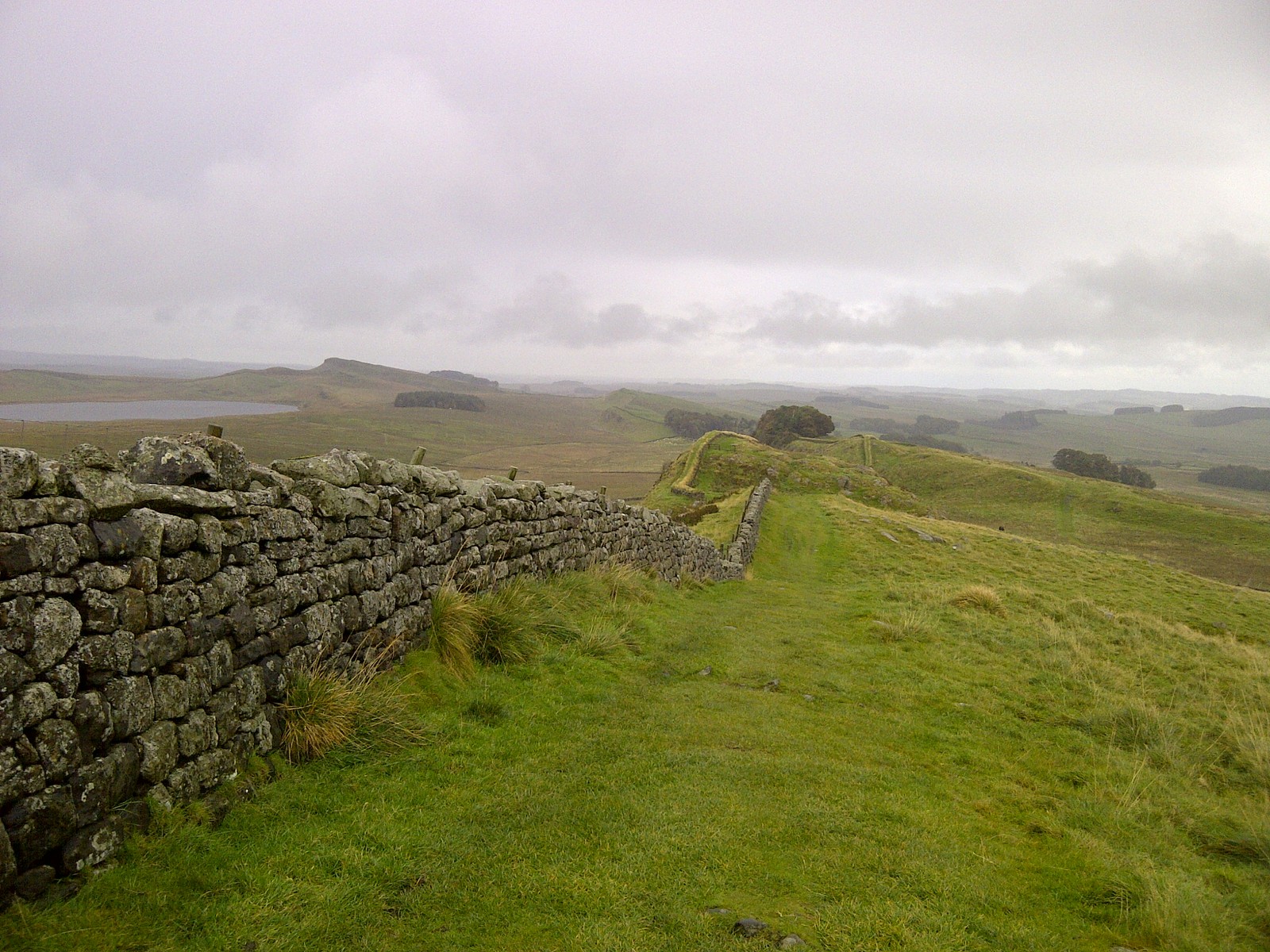
I long ago took note of the fact that people do not want to hear about or read about your triumphs and your wonderful experiences. It's boring. They don't like that. Instead they get far more pleasure out of stories of ineptitude and depravity. So, instead of recounting our successful trek across England along ancient Hadrian's Wall over breathtakingly beautiful green hills I will tell you about the last night of the trip when I nearly got the shit kicked out of me in Newcastle.

Saturday night in Newcastle begins at 11:00 am. John and I were on the second floor of "The Charles Grey" pub overlooking, appropriately enough, Grey's Monument (yes, that's the Earl Charles Grey of tea fame) for an early pint and lunch when we overheard a heated discussion between the barman and a young gentleman who was, as the English delicately put it, "in his cups". He was being refused service because of his state and he did not like this. The young man stormed off. A few minutes later a customer came in and told the barman that the fellow who had just left was pissing in the stairwell. Remember this is 11:00 in the morning. This was an omen.

After an afternoon of taking in the sights John and I ended up at the "Crown Posada" in the heart of the city, off a small cobbled lane. We had asked Maxine, the owner of our B&B, for pub recommendations. She listed off a few places that we already knew to be of the glass and chrome and sparkly lager variety so when we described in more detail what we were looking for she smiled and nodded and said, "Oh, you're looking for an 'Old Man Pub' then!". I guess we were. The Crown Posada is a classic old man pub, perhaps one of the very best I've ever seen - all dark wood, leather banquettes, pressed tin ceiling, gleaming brass and, best of all, an old record player spinning blues, jazz, deep cuts from The Who and The Stones. Packed, loud and friendly. And the only place in the centre of the city where someone over the age of 25 feels at home on a Saturday night.

Why do I make that last statement? I make it because starting at around 7:00 pm the streets increasingly filled with people between the ages of 16 and 25 until it was only them and there were thousands of them. They fly in from all over Britain for this. Seriously. Despite the single digit October temperatures every last girl/woman out there wore an ultra-miniskirt, low cut blouse and very high heels. Every. Last. One. No exceptions. And every last boy/man wore designer jeans and a two sizes too small t-shirt with no jacket. Every. Last. One. It was bizarre. It was like being on a movie set. The only exceptions were John and I and the police. The cops stood inconspicuously down side streets with their distinctive yellow safety vests and checkered hat bands. They stood very quietly, watching, listening. As the evening went on the crowd grew louder and wilder and unsteadier. You could begin to hear glass being broken by about 10:00 pm and the general shouting gradually ramping up into shrieks from the girls/women and bellows from the boys/men.

John and I ducked in and out of the Crown Posada while this was going on. It was like stepping back and forth through a magical portal between two entirely different worlds. The last time we stepped out, sometime shortly before midnight, I found myself suddenly facing one of these bellowers.
"Oi! Yee 'Merican?"
I glanced around quickly to make sure he was bellowing at me.
"No, Canadian."
He was moving into chest bump position with his two sizes too small grey t-shirt. I could see that his eyes were bloodshot and his arms were pink from the cold.
"Gan canny r ah will dunsh yer heed!"
Or something like that. He may as well have been speaking Latvian. The combination of accent and liquor had rendered him incomprehensible. Regardless he looked very irate and was clearly winding up to put the boots to me.
"Ok, it's cool man," I chuckled and smiled. This only enraged him further.
His wobbly girlfriend then began tugging on his shirt sleeve and managed to pull him off in another direction. He obligingly stumbled along, but not before looking back and shaking his fist at me, "Fook off!!!"


John and I made an impromptu decision to head to the end of the street and grab a cab. We were about the climb in when a girl/woman came stumbling up shrieking "I need this cab! I need this cab! Please!!" The cab driver looked at us and mouthed "no" very clearly, his eyes wide, his head shaking slowly. We elbowed the shrieker aside and got in. We locked the door. The cab accelerated and the shrieks and bellows faded away.
"Another Saturday night in Newcastle," the cabbie said.


Wednesday, December 19, 2012

Regarding the Dunce Cap

The other evening my 10 year old daughter called my 8 year old son a dunce. Like most siblings, insults between them are routine, but I was surprised by the use of the word "dunce". I had assumed that it had long ago quietly dropped out of modern English usage along with other quaint insults such as "nincompoop" and "dunderhead".

Duns cup helps with concentrationThis then got me thinking about dunce caps. For those of you too young or too innocent, dunce caps were tall conical hats with a "dunce" or simply "D" written on them that especially slow or misbehaving children were forced to wear while seated on a special stool in the classroom as a kind of shaming. Although I was in grade school long enough ago to have had a school principal who actually kept a leather strap in his desk drawer that he was not only legally permitted to use on children but positively encouraged to, I was at least a couple generations too late for the dunce cap.


So where does this curious custom come from? The word dunce itself derives from the 13th century Franciscan monk and great philosopher, John Duns Scotus, who in turn is named after the town of Duns in Scotland where he was born. His followers were known as "Dunsmen" or "Dunses". Scotus was also known as "the Subtle Doctor" and his philosophy was so subtle as to be exceedingly difficult to follow. Regardless, it remained well respected and even popular until the 16th century when it came under heavy attack. The Dunses were derided as hair-splitters and eventually lost favour. In the process their name became associated with idiocy. So far, so good, eh? Dunsmen = Dunses = dunces = idiots. But what about the funny hat?

Here then is the interesting bit. John Duns Scotus believed that wearing a tall cone would allow knowledge to flow down to the wearer's head, with the pointy bit representing the pinnacle or apex of knowledge. Dunsmen consequently wore them and the hats too became, perhaps not unfairly, associated with idiocy. Duns also theorized that the hat would help the wearer focus. Fast forward 700 years and dyslexia researcher Ron Davis decided to try putting pointy conical hats (presumably not calling them dunce caps) on dyslexic children. He then asked them to concentrate on the unseen point above their heads and gave them something to read that they had previously been unable to. You know what's coming next. Yes indeed, the pointy hat wearers could now suddenly read.

John Duns Scotus was sainted by Pope John Paul II in 1993.

I wasn’t looking for trouble, it came looking for me