"Schlaraffenland", the German Arcadia.

Monday, March 13, 2017

A Donkey, A Sack Of Gummi Bears And Mt Everest


Herein lies a convoluted tale of, yes, donkeys, and of gummi bears, and of Mt Everest, but it is not what you are picturing, because it is also of staircases in my house and of a peculiar little obsessive idea.

Our story begins in the hills of Burgundy, France, in the summer of 2010. My wife, Lorraine, my eight year old daughter, Isabel, and my five year old son, Alexander, and I had booked a "donkey trekking" holiday. Donkey trekking, at least in the French context, involves hiring a donkey to carry your bags while you walk through the countryside from farm to farm and village to village, staying in pre-arranged B&Bs that can also accommodate donkeys (outside, in a barn).
I described some of the foibles involved with this in a previous post:
http://terraarcadia.blogspot.ca/2012/03/all-barnyard-animals.html

It was more or less as idyllic as it sounds, like walking into the pages of Peter Mayle's "A Year In Provence". Our donkey, Odyssee, was a pleasant and compliant companion and the landscape was tourist-brochure gorgeous. In part it was made so by the steep hills. If you were paying attention
you'll have noticed that Odyssee carried bags, not people. An occasional exception was made for Alexander, but otherwise we all, children included, hiked up and down these hills for up to 15 km a day during what was one of France's hottest summers on record.

Predictable difficulties ensued.

Five and eight year olds can't really murder you for your foolishness, but they can complain and wail and cry in a way that makes you wish that someone would.

We reached "the hill too far".

You know the one.

The first few hills can be made fun with the right amount of jollying up, but by the time "the hill too far" comes along you and your spouse are yourselves comprehensively exhausted and are no longer capable of the superhuman jollying required. Things were looking pretty grim.

Then I remembered. Then I remembered that my uncle had given the kids a giant sack of gummi bears when we visited him in Frankfurt. Like a kilo or something. I was appalled and whisked it into my pack before the kids cottoned on. I was looking at the topographic map when the idea struck me.

"Isabel! Alexander! See this map? See these lines? Each one represents a ten meter climb. That hill is six lines up from here. I'll give you..." and here I paused dramatically while I fished out the gummi sack. "... one gummi bear for every line you cross going up without complaining."

God bless that drug-like gummi goodness for motivation and the concentrated sugar for energy. The rest of the walk went splendidly. They actually began looking forward to hills.

~

So, fast forward to later that year back in Winnipeg. It was a foul stormy winter day and cabin fever was setting in. In a desperate gambit to avoid having to watch Despicable Me for the 14th time (it's a fine film, but a man has his limits) I remembered France and popped out to Safeway to buy gummi bears. The kids and I then measured our staircase. It turns out that it is 5.4 vertical meters up the two flights from the basement to the upstairs hall. I told them that they could have a gummi bear for every two times they went up and down the stairs. They didn't quibble about the extra 0.8 meters.

As they did this I began idly wondering how many times you'd have to do that to climb Mt Everest... The answer is 646 times. As there are two flights per ascent, that means 1292 total flights of stairs to climb the vertical distance from Everest base-camp at 5360 m to the summit at 8848 m.

And so a peculiar little obsessive idea was born. I began calculating the stair height of various smaller mountains and of various famous tall towers. I began climbing their equivalents and found that for some reason that remains unclear to me I actually enjoyed it. (I doumented the first several ascents here: http://everest-in-my-house.blogspot.com/) "Climbing Everest" in this odd fashion began to seem like a realistic prospect. At least at first it did as I made rapid progress extending my heights from 100 flights to 200 to 300 etc.. But then at about 500 I hit some sort of limit. Fatigue, pain, boredom, the feeling of futility - all of these became large enough factors to make pushing to almost 2 1/2 times that seem not only foolish (more foolish?), but impossible. So I slowly... quietly... dropped it, going from stair climbing twice a week, to once a week, to monthly, to never.

~

Now another six years have gone by. In the intervening time I had occasional thoughts that perhaps I could still do it if I mirrored the actual climbers and did it in five stages spread over five consecutive days: 238 flights to Camp 1, 148 to Camp 2, 296 to Camp 3, 278 to Camp 4 and then 332 to the summit. Even that seemed like a lot and the motivation still eluded me.

Then last week something happened. There was heavy rain on Monday, followed by a deep freeze and scouring winds, making it the iciest I can ever remember. It was impossible, or at least very hazardous and unpleasant, to ski, cycle, skate, run or even walk. The wild wind whipped spindrifts into the clear blue sky off of roofs and the remaining snow piles. I thought, 'this is like the summit of Everest...' And then I considered that I had a stretch of days off and suddenly the motivation returned. Like flipping a switch.

And now it's done. Yesterday at about 12:30 p.m. I "summited". I took the inevitable selfie, told my family (Lorraine smiled, Alexander looked at me blankly and Isabel rolled her eyes), took a shower and had a big lunch.  And began to think about doing it again, but doing some of it breathing through a snorkel to simulate low oxygen...

But that would just be weird.


This is me in 1993 looking at "the real Mt Everest" in the distance.


Thursday, July 14, 2016

Yes, You Climb Volcano!


As my focus has been on my other blogs since our return from our around the world trip, this blog has been snoozing. I'll re-post a few old favorites in the meantime until I am able to properly shake it awake.

A number of years ago Lorraine and I were traveling in Southeast Asia when we ended up in a little flyspeck cluster of isles in eastern Indonesia named the Bandas. The Banda islands are each quite small and low and are arranged in a kind of loose bracelet around Gunung Api, an active volcano that rises in a perfect cone out of the sea in Banda harbour like a child's naive drawing of a South Sea's volcano. There is little to do in the Bandas other than snorkel and stroll and fully exercise one's passion for sloth, but after a week or so of staring up at that magnificent volcano I could sloth no more and began to think about climbing it.

The idea was, evidently, not original. Our host smiled and nodded vigorously - "Yes, you climb volcano!!" - and arranged for Bapa Saleh, the guide, to meet me at five the next morning. I say "me" and not "us" as Lorraine has an uncanny intuition for detecting when I'm being an idiot.

So Bapa Saleh and I set off across Banda harbour in a dugout canoe at five the next morning, with me in splendid anticipation of the magnificent view from the peak of Gunung Api that would be had of dawn breaking over the glittering Banda Sea.

This anticipation was almost immediately replaced by bewilderment and then ever-higher states of anxiety as it became painfully clear that this thing was actually going to be bloody difficult to ascend. The volcano was entirely covered by loose sharp rocks on a slope as utterly steep as gravity and the established principles of physics would allow a slope of loose sharp rocks to be. Consequently I was reduced to scrabbling up on all fours with three slips down for every four scrabbles up. In short order, despite the pre-dawn coolness, I was completely saturated in sweat, coated in grime (albeit exotic volcanic grime) and both my knees were bleeding.

At this point it probably bears mentioning that I am a (relatively) young and healthy man. Bapa Saleh was sixtyish, wearing only bathing shorts and a Kentucky Fried Chicken t-shirt and was in bare feet. Bare feet! Moreover, the man could move at an incredible clip and, perversely, his only English was "Slowly, slowly!" which he would periodically shout down to where I lay gasping and panting as he continued to skip up the mountain.

Then it began to rain. Hard.

I have few recollections of the rest of that climb other than that of a strong smell of sulphur and a hazy photo taken by the hugely smiling Bapa Saleh with me looking like something that might have been found in the trenches at the Somme, clutching an Indonesian phrasebook and sitting at the utterly socked-in summit.


Wednesday, May 13, 2015

Berlin Is A Riot

Alex was grinning. “Yes, sometimes the punks are throwing bottles at the police!”
Alex, a tall young man with a ponytail who probably should have been named Fabio, was renting us bikes and marking up a map with suggestions.
“This is Mauerpark.” Circled emphatically in blue pen. “And tonight is Walpurgis Night! In pagan times the witches came out that night. People light bonfires all over, including in these parks. It will be fun - you have to go! The punks aren't interested in you. You just find a corner or something and watch.”
We nodded, rendered somewhat mute by the jet-lag haze as we had only just landed in Berlin that morning.
“And tomorrow is May Day! You have to go to Kreuzberg!” Another bold blue circle. “There will be a big street party in the whole area with lots of music and food and then at night the demos start again. Maybe some cars get set on fire! Just watch, it's interesting!”

The word “interesting” covers a whole range of experiences, so we couldn't really argue with that. Thanking Alex we rode off, first to find beer and then to find punks. Armed with “Around Berlin in 80 Beers” and Alex's map we felt ready. More or less. Arrival day after a trans-Atlantic flight is always somewhat surreal regardless of where you end up, but Berlin amplifies this a hundred-fold as it is an inherently surreal city. Take Prussians, cabaret singers, Nazis, Soviets, spies, refugees, American G.I.s, misfits, East German communists, anarchists, Turks, student rebels, artists, secret police, filmmakers and currywurst kiosk operators, toss them in a blender with their buildings and their art and their music and then spit the result out across the urban canvas, sprinkled with more than a few weedy empty lots and some truly spectacular large parks. The result is an acid trip kaleidoscope of a city – not exactly “beautiful” in the sense of the giant open air museum effect of Paris, but thrumming with energy and life and promise. And deeply deeply surreal.

But punks, you want to hear about punks. Properly fortified with Berliner Weisse (google this if you are a beer person) and Berliner Pilsner we rode up towards Mauerpark. It was dark by then. We locked up the bikes beside a nearby square, under the elevated S-Bahn commuter train line, scarfed down a currywurst (sausage chunks smothered in curried ketchup – this is far better than it sounds) and walked to Mauerpark. The street leading up to the park was quiet, but ominously lined with paddy wagons. The police themselves were arrayed at the edge of the park in nervous phalanxes. Oddly, they were facing down the surrounding streets rather than into the park. A young and, it must be said, very pretty officer standing at the entrance asked us whether we had any glass bottles in our packs. "Nein", we said, and she waved us in. Perhaps we would have been searched had we been wearing balaclavas, but as it was, security seemed to function on a curious honour system. We walked with ever larger groups of people towards the centre of the park where indeed there was an enormous bonfire. But no punks. Just young hipster families, fire jugglers and a duo playing what can honestly only be described as an homage to Kenny G. It was now clear why there were no punks and why the police were facing away from the park. Perhaps it was too early in the evening?

We tired of the crowd sporting man-buns and top-knots (if you are a samurai warrior, fine, but otherwise this is 2015's version of the 1975 porn-stache: a style that went from cool to ridiculous before you even realized it was a style) and the polyester neo-pagan vibe and left the park. Across from the entrance on a street at right angles to the one we had come down there appeared to be a commotion. There was loud chanting and shouts. The phalanxes of police were looking even more nervous, fiddling with their shields and putting on their riot helmets.
Oh.
We were curious, but not that curious, so we headed back up toward where we had parked our bikes. Had we been more on the ball and worked out the geography we would have realized that the chanting was coming from a parallel street and was moving towards the square. Before we could sort this out we found ourselves facing the demonstrators, an enormous crowd of rhythmically shouting people waving all manner of mostly red and black flags. We were about to back up to get out of their way when scores of riot police formed up directly behind us. Demonstrators in front. Riot police behind. Lots of both. In the dark. In a strange city. Sleep deprived, jet-lagged and full of beer we stood there slack-jawed and indecisive. In another time in another place we might have paid a serious price for our sluggish brains and reflexes, but this was 2015 and this was Germany. We stepped aside into an entryway to allow the mob to surge by. At first the police walked backwards in front of them and then formed marching lines on either side to funnel them into the square. Nobody so much as glanced at us.


And what were they demonstrating about? These were Marxist, anarchist, trade unionist and feminist groups demonstrating in favour of refugee claimants. The chants more or less ran, “refugees stay, Nazis go away”. No bottles were thrown, no cars set alight. The same thing the next day in Kreuzberg, where the largest street party I have ever seen unfolded on block after block festooned with anti-fascist graffiti, punctuated by stages pounding out death metal, reggae, techno and rap (yes, German rap – it's ok to shudder). The police – and again there were hundreds of them in full riot regalia – stood by unobtrusively at the edges, swooping in only once to scoop up a belligerent drunk. So much activity, so much diversity, so much to hear and see, so much food, so much beer, so many people, so many people drinking so much beer and – here is a troubling fact – absolutely nowhere to pee. Hectolitres in and... How this all turned out we don't know as we were tired and we knew with certainty that there was a bathroom back at the apartment.  

Friday, December 12, 2014

Holy Temple Ratman!


“Let's go to the rat temple.”
That's what Paul said.
We all looked up from our postcard writing and guidebook reading, “What? The what temple?”
“Rat! The rat temple! The Karni Mata! It's only an hour out of our way!”
He was enthusiastic.
By now we all had acquired more than a passing familiarity with the range of animal gods in the Hindu pantheon from the monkey-headed and the ever popular elephant-headed through to Vishnu's eclectic assortment of avatars. I assumed that the rat temple was to honor Ganesha's vehicle, Kroncha the rat. How a rat could possibly be a “vehicle” for an elephant is another story but in any case I was wrong. Kroncha is in fact a mouse, not a rat, and the Karni Mata was built to honor Laxman, stepson of the goddess Karni Mata. Laxman died accidentally and Karni Mata begged Yama, the god of death, to bring him back to life. He did so, but as a rat. The 20,000 rats that inhabit the temple today are descendents of Laxman.

So, lacking anything better to do and, to be honest, somewhat brain addled by heat, poor nutrition and dysentry, we agreed with Paul and off we went. To the rat temple. Now a thing that you should know about Hindu temples if you don't already is that you have to take your shoes off before going in. Another thing you should know about Hindu temples is that even the famous ones can actually be quite small and cramped inside. And finally, one more thing you should know, this time about rats, is that rats poop a lot. Bare feet, small space, 20,000 rats pooping. It well may be that the temple was beautifully carved and decorated inside, but I will freely admit that the entirety of my attention was directed towards foot placement. I stood on my toes and scanned the tiled floor, calibrating each step with great care. But still it was nasty. And I like rats. I can only imagine what kind of a state a rat-o-phobe would be in. The poop wasn't the only thing to be on alert for. The mortality rate among the rats seemed to be quite high, despite the lavish attention and care accorded them by the priests, so while the live ones would scatter with each step, sometimes running right over your feet in their panic, the dead naturally did not and thus presented additional obstacles. And should you accidentally be the cause of a rat's demise, say a slow witted, slow moving one, you will be obliged to donate a gold rat to the temple. I'm absolutely serious.


This funhouse atmosphere kept us amused for, oh, perhaps a minute or two before we began trying to make our way to the exit. On the way out I saw a pilgrim bend down and pick up a gnawed upon piece of rat food (amusingly called “bhog”). He made a prayer motion and popped it in his mouth. Eating food the rats have chewed on is apparently a high honour. I was, however, completely satisfied with my state of dishonour and moved on, thinking only about clean water, a bucket and a towel.

Wednesday, June 11, 2014

7 Snapshots of Europe, Spring 2014: 7. La Vie En Seine

Ok, I know the grammar is suspect, but I couldn't resist the pun. And technically we were staying "sur la Seine" rather than "en Seine", but anyway... So the end of the trip found us in Paris, on a houseboat. We rented the "Chalik", moored beside the Pont d'Austerlitz. From the bridge tourists would look down and see us enjoying a lunch of baguette, goat cheese and cheap white wine on the deck and they would smile and get their cameras out. I could see the thought bubbles floating above their heads, "Ah, those stylish Parisians, what a life!" Tourists taking pictures of other tourists. Sometimes I would give them a thin smile back and sometimes I would ignore them, haughty Parisian I had become.
The boat had some decidedly funky features, such as the lack of light in the shower - solved with a carefully placed flashlight - but by and large it was a brilliant way to live in the heart of a big city. It functioned as a kind of refuge, slightly separated from the constant tumult on land. That being said, Paris may be "The City of Light" but it is also "The City of Constant Sirens" and there was no escaping that on the water. Moreover, we were regularly subject to being swept by high intensity search lights as the dinner cruise boats passed by in the evening which would then rock the Chalik in their wake.
Those caveats aside, the location was marvelously convenient to the Metro, markets, boulangeries, patisseries, cafes, bistros - really everything one desires and expects living in Paris. We felt very in-the-know and debonair locking up our houseboat and sauntering over to the local bistro for a bite. And trying as much as possible to fit in we would use our Francaise rustique and not stoop to consulting a phrasebook before ordering random delicacies such as rognons. Red onions, right? No. Not red onions. Kidneys. Whoops. Imagine extra firm liver with a hint of urine. Back to the boat then. Back to bobbing on the Seine. Back to munching baguette and goat cheese and smugly watching les touristes watching us. Pretending to be Parisian was significantly more fun than being Parisian.


Wednesday, May 28, 2014

7 Snapshots of Europe, Spring 2014: 6. Les Clochards

There is no denying it, the Eiffel Tower is impressive and, yes, beautiful in a way that sidesteps the cliches. It is astonishing to think that it was almost torn down in 1909 when the original 20 year permit expired and only avoided that fate because having antennas so high up was deemed useful. We took the requisite several dozen photos from various angles, necks constantly craned upwards, but what sticks in my memory is what I saw when I looked down. On the narrow cement boulevard in the street that runs between the tower and the Seine lay a man. He was black and shoe-less and lying face down, wearing a shirt that hung loosely from one shoulder and pants that were so torn that most of his left buttock was exposed. Streams of people passed around him on both sides like a river around a rock. It was hard to tell whether he was breathing. This was our first clochard.

Les clochards are the Parisian versions of bums or winos or what I suppose we now rather colourlessly call homeless persons. They have a long tradition here and few tourists fail to notice them. The clochard classique is a scruffy bearded fellow wearing too many layers sitting with his fellows on the banks of the Seine, gripping a bottle of red wine by the neck. These still exist, but the range is much wider today. The unconscious fellow under the Eiffel Tower represents the one extreme where it's hard not to imagine a heart-rending back-story involving a West African family pooling its savings to pay a smuggler to take their brightest boy across the Sahara and the Mediterranean, only to have the dream end in destitution, starvation and collapse. Or maybe he was just tired and needed a nap. At the other extreme, near where we were staying, we saw a pair of clochards pitch two spiffy mountaineering tents on a patch of grass under the Pont d'Austerlitz. Every morning they would pack up their tents and clean up their campsite and then every evening they would set everything up again. They didn't bother anybody and nobody bothered them.

My favorites though were the nattily, if eccentrically, dressed old men, greasy grey hair carefully combed, colourful scarf knotted just so, favorite bench reserved from where they would smile at the pretty girls (yes, no shortage thereof in Paris) and perhaps thumb a fat tattered novel, sipping something from a paper bag. Or perhaps these weren't clochards at all. Perhaps they were just happy to get out of the house.

Wednesday, May 21, 2014

7 Snapshots of Europe, Spring 2014: 5. The Ballad Of The Missing Brick

And so it came to pass that we found ourselves with several hours to spare in Munich before boarding a night train to Paris. Munich is fun, Munich is cool, but Munich late on a Thursday evening offers few diversions for a family with two children. So we took them to a beer hall.
Some Munich beer halls are exactly what you picture: long wooden tables of people swaying and singing while comely waitresses in dirndls (google that) carry giant mugs of beer and a polka band does its thing. That's not where we went. I remembered a smaller polka-free spot from my last visit, the Andechser am Dom, and I remembered that with luck we could get a table in the crypt. A beer hall with a crypt. Sure enough, the waiter led us through the packed hall, down a curving stair and into the basement where there were a handful of high tables set in dark niches. Much quieter, much cooler. "Medieval".
And so it also came to pass that Alexander brought his new Lego to that dark niche. We ordered great lashings of sausages and beer, or at least I did, and settled in for an evening of watching the toings and froings and generally soaking in the beer hall crypt vibe. This entertained Alexander for all of twenty seconds after which he began campaigning to open his Lego package. I told him, no, that's a bad idea because inevitably you will lose a piece and it will disappear on the dark floor below. The crypt was very old and very dark with lots of cracks and corners and spaces, in short a black hole for Lego.
But I really really really want to.
No, it's a bad idea. Look at the cool pictures on the wall.
Da-ad. Please please please, I won't lose any. I promise.
By then the beer had buffed my edges down to a smooth agreeable gloss.
Ok. But it's your problem if you lose a brick.
So Lego playing began on the small high table with the yawning black hole below. More beer was consumed and the evening slid along in an agreeable fashion until... plink.
Uh oh.
What happened?
I lost a brick.
See! Well, you won't find it. It's lost forever down there. I hope you learn something from this. Yada yada yada.
To our chagrin Alexander hopped off his stool and began crawling around on the floor, under other people's tables, in front of waitresses carrying armloads of beer, poking in dark corners that hadn't been poked in since 1571. Everyone was very accommodating though, charmed by the cute little boy looking for his Lego. The waiter even crouched down and used his lighter to illuminate the area.
No luck. A piece of fossilized chewing gum and an earring, but no Lego.
See! You didn't find it did you? It's lost forever down there. I hope you learn something from this. Yada yada yada.
When it finally came time to leave and we stood up to put our jackets on Alexander suddenly dropped to the ground. Before I could say anything he was up again, grinning triumphantly, holding up - you guessed it - the missing brick.
See dad, you were wrong!
So, the moral of the story is...


Wednesday, May 14, 2014

7 Snapshots of Europe, Spring 2014: 4. Bavarian Green

When you think of Bavaria you might think of the Alps, or of gigantic mugs of beer, or of ornate castles, or of, I don't know, lederhosen? You should think of green. I have been many green places from Prince Edward Island to England to Belize to New Zealand (to be fair, the latter just for a day), but now when I think of the colour green I only think of the view outside the window of our farm-stay in the foothills of southern Bavaria.
After some confusion involving the fact that the tiny village of Niedersonthofen sported two farm-stays run by families named Schoell we settled in and began to stare at the green. Or at least I did. Lorraine spent time with the farm's beautiful Arab horses and the kids loved feeding the goats and watching the gentle brown cows being milked, but I would sit on the balcony and stare at the meadow or, even better, wander out into it and stand there. A Bavarian meadow is not just grass, but an array of plants, all diligently cropped to a uniform height by the cows. It is claimed that many of these plants impart subtle flavours and even health benefits to the milk. I cannot vouch for that, although the fresh milk certainly was tasty, but I can vouch for the colour: yes, green. Not just regular Canadian suburban lawn green, but an intense pure green. Acid trip green. Mad science radioactive green. Alien planet green. Photoshop green. I don't know why this is. Perhaps the cows produce not only special milk, but special manure too. Regardless the effect is mesmerizing and I could not get enough of it. This was a wandering through and standing on and staring at meadow though, not a laying on meadow like in Provence. "Special manure".
  

Monday, May 12, 2014

7 Snapshots of Europe, Spring 2014: 3. Manarola Inside Out

Manarola can be a little hard to get to. Apple Maps infamously sent drivers deep into the Australian Outback where they had to be rescued, but Google Maps need not be too smug as it sent us down a serpentine Ligurian road towards a dead-end that had been created over a year ago by a mudslide. So we backtracked, returned to the main road and took a circuitous detour to approach Manarola from the other direction.
Manarola.
If you've ever received a calendar from a real estate agent you've seen it. It's one of the five fishing villages that make up the Cinque Terre on the northwest coast of Italy. It's a multicoloured Lego brick town jammed against a cliffside. Paul Klee could have painted it. The harbour is so small that the fishing boats are hauled up on rollers and parked in front of the houses on the only road, and that road is only open to local traffic and then only for a few hours in the early morning. Visitors park above the village and walk down, their rolling suitcases making that characteristic rattle on the cobbles. Only one road even though 800 people live here. This is because all the other streets are in effect really just open-air hallways. Narrow, winding open-air hallways, interrupted and connected by staircases, in some cases very steep and long staircases. There are no bicycles and very few fat people. These "hallways" are often only as wide as you can reach. The house we rented was one small room wide and five floors high. The front door was on the first floor and the back door on the fourth floor.
The effect was bewildering and delightful. When the church bells rang and children raced ahead and disappeared around corners I felt like I had stepped into a classic Chef Boy-ar-Dee commercial and I laughed. When Alexander raced ahead and disappeared around a corner - really disappeared - I felt like I had stepped into the opening scene of a made for TV drama and I shouted. We eventually found him, of course.
If we had stayed a few more days we would have cased every odd little side passage and stairway and inevitably the strange topography would have become familiar and even ordinary. But the maze spreads outwards, up and down the steep wine terraces to the next village and then the next and the next, so I don't think I would have become bored.

Monday, May 05, 2014

7 Snapshots of Europe, Spring 2014: 2. Bathed in Klimt

Les Baux de Provence is a tiny fortified medieval town that sits high on a rocky outcropping and has the distinction - perhaps even notoriety - of being named one of France's "most beautiful towns". This appellation brings with it the promise of tour buses, many many tour buses. Being tiny as well as most beautiful then becomes a significant problem. Fortunately we were there in early April, at a time when the tour buses were in the single digits, rather than the double or even triple of July, but it did lead one to wonder, where would all the people go? The answer it turns out was into the mines. The bauxite mines. A couple hundred meters back, along the side of the rocky outcropping, was the world's first bauxite mine (bauxite, Les Baux, get it?) and this has been transformed into an otherworldly art experience. I was skeptical. "Tourist bait," I thought. "Cheesy and overpriced," I thought. "Bo-ring," I thought.
I thought wrong.
Maybe the experience in July packed shoulder to shoulder with jostling seniors from Hamburg would be different, but that day it was mostly empty and it was extraordinary. We stepped into a vast empty underground chamber, the floor, walls and ceiling of raw stone. The ceiling was three or four stories up and the chamber divided into sub-spaces by massive square pillars and partial walls. And all around us, on the floor too, were moving projections of paintings. Moving and morphing and blending into each other. The show that day was Gustav Klimt. We were bathed in him. Bathed in his astonishing colour. Music took this already overwhelming experience and made it emotional. "Overwhelming" has a pejorative flavour, but I mean it in its most positive sense. My jaw literally dropped. I mean it: my chin hung loose with my mouth open. I almost cried it was so beautiful, so moving, so unexpected. This went on for twenty minutes as we wandered the vast space, but I could have spent the whole day there.
This was apparently originally the idea of the artist and filmmaker Jean Cocteau. His films are run continuously in a second mine space. We saw old Greek women wailing about a dead boy in jerky black and white. We lasted about two minutes. This was the anti-Klimt. Perhaps the antidote was necessary to ease the transition back into the world.
  

Wednesday, April 23, 2014

7 Snapshots of Europe, Spring 2014: 1. An Hour In Provence

Meadows are nice. Even the word meadow is nice. Among the nice meadows I have known the small one on the slope behind the Mas de l'Ange is one of the nicest. To backtrack a little, the Mas de l'Ange is a 16th century farmhouse in the Provence region of southern France that we rented for a week. It is built into the side of the hill such that the back walls of the dining and living rooms are the rough limestone of the interior of the hill, like the walls of a cave. The red tiled roof then forms a continuous slope to the back with the meadow that covers the part of the hill not eaten by the house. This is "the meadow".
I am not an especially smell oriented person. I love light and form and texture and song and taste, but I rarely give much thought to preferred or memorable smells. The meadow is however a smell memory. It is the memory of the smell of honey and of thyme and of rosemary. The last two had obvious explanations because they grow in numbers reserved for objectionable weeds at home, but the honey was confusing at first. It was confusing until I realized that there was so much in bloom that large amounts of nectar were being volatilized into the warm spring air. Flowers countless and nameless (at least to me) formed the perfect bed for the perfect nap. At least until I figured out how to position myself to avoid the less showy small prickly plants, also countless and nameless. Then with my eyes closed, breathing in that honey scented air, I only heard the thrumming of bees and the distant sounds of a farmer attacking the dead branches of his olive trees with a chainsaw. Van Gogh was committed to an asylum a few kilometers to my right and from the ruined castle straight ahead the infamous Lords of Baux once looked down on this meadow with rapacious eyes, but none of that was on my mind. All I was thinking of was, “rose is absurdly cheap here, I should have brought a bottle to the meadow rather than just a glass...”
  

Sunday, January 12, 2014

F Deck


You'd be hard pressed to find a backpacker in Europe who does not respond to the mention of Brindisi with the remark, "Ah, sleazy Brindisi". When we arrived in the Italian port this seemed like an exaggeration. Unpleasant Brindisi, yes. Dodgy Brindisi, for sure. But sleazy? However, rhyme has a power and inference of truth about it, so soon we found ourselves muttering "sleazy Brindisi" as we pushed through the sweating crowds along the motor-scooter choked road to the port where we were to catch our night ferry to Greece.
Our packs were preposterously large and it was an oppressively humid hot evening, so when we arrived my first priority was to find a place to stow our packs for the three or four hours before we would be allowed to board. The port area was deserted except for a police post. I entered and smiled my best innocent Canadian abroad smile at the three men inside. They were wearing neat olive green uniforms accented with all manner of piping and epaulets and each sported a thick black mustache and large black sunglasses. The effect was almost comical.
"Mi scusi," I said, holding open the English-Italian section in our multi-lingual dictionary.
"Do you know where we can store our luggage for a few hours?"
"This Italia, you speak Italian!" one of them barked, thrusting a finger at me.
"Uh," I began flipping through the dictionary.
He cut me off with a brisk wave to the door and turned his back. The other two didn't move or speak.
I left.

We were traveling that day with a team of marathon runners from South Africa. John and Elke were like specimens from a Bowflex advertisement whereas Vince and Gloria were decidedly gnomish and difficult to picture as runners. Vince was the very image of a kindly old gentlemen with his snow white hair and twinkling eyes, so it was all the more jarring when he leaned over and whispered to me, "Ach ja Philipp, the black man, he don't like to work, you know, he only likes to breed."  John and Elke, on the other hand, although also white, were very active in the Zulu based Inkatha Freedom Party and talked a lot about politics, peppered with bits of colour from everyday life in South Africa: "Ja, I have five guns already, but the 9 mm parabellums are too heavy. I need another smaller one." In any case, John, being imposing Bowflex man, offered to stand guard over the luggage while the rest of us went back into town and foraged for supper.

When it was finally time to board we stumbled our way through the dark labyrinthine docks to a poorly lit metal ramp where we boarded alongside a line of idling diesel transport trucks. Once on the ferry we were, to our surprise, greeted by a Russian crew. Even though the Cold War was over there was still something faintly menacing about being given instructions in a thick Russian accent.
"Cabin is on F deck. Follow me."
We followed the thin-lipped but attractive young blonde purser down a long series of metal stairways, her black pumps clank-clank-clanking ahead of us.
A deck. B deck. C deck. D deck. E deck. Then F deck, well below the waterline and constructed entirely out of grey metal with low ceilings and a disorienting grid of identical gangways leading to the cabins. She open the door to our cabin, gestured inside and then turned heel and left. We peered in. It was a box. A grey metal box. A grey metal box with bunk-beds, a sink, a ventilation grill and a large warning sign on the wall. That was it. I cannot emphasize enough the strong resemblance to a prison cell. A prison cell in a totalitarian state with a questionable human rights record. We stepped inside and read the sign:
"Note: Passengers are kindly reminded that the bow thruster which is situated below this deck makes an unpleasant noise when in use on departures and arrivals. This is quite normal and should give no cause for anxiety."
One has to wonder how many times passengers ran in screaming panic down the gangways before management decided to mount such a prominent sign. It was curiously only in English and French. Are Italian, Greek and German speakers calmer?

We explored F deck, checking out the utilitarian metal shower rooms and the various opportunities for becoming lost or claustrophobic or both. When we had milked this for as much entertainment value as possible we returned to our cell and waited for the bow thruster. It was beastly hot in there and it was morbidly fascinating to listen to the sound of giant chains being scraped along somewhere above us, presumably to secure the transport trucks. Then there was silence for a few minutes and then the bow thruster came violently to life. We were glad to have been warned.

To escape the heat we went up on deck and watched the ferry cut into the Ionian Sea in a dark so black that the sea and sky merged together. The stars were perfectly reflected on the water ahead, creating the illusion of traveling into space. After a time we went back below where the ventilation was now working and quickly fell asleep. There was no sensation of motion.


Wednesday, May 29, 2013

Sucking Gas in the Himalaya

Not a day went by in Kathmandu where we weren't asked about trekking. Where have you been trekking? Where are you going to go trekking? Why haven't you already been trekking? Why aren't you going trekking? And so on. Lorraine and I would mumble something about the effect of camping for a month in Pakistan and India. We would use the word "dysentery" a lot, as well as its more colourful synonyms. People would change the subject.

But after a couple of weeks of wandering around the Kathmandu Valley, Lorraine sketching temples and me eating chocolate, we began to feel restless. We began to feel the need to at least see Mount Everest. With that in mind we negotiated with a tax driver to drive us (see, still no trekking!) west of Kathmandu and out of the valley to the old hill station of Nagarkot. Nagarkot was famous for it's sweeping views of the entire eastern Himalaya, including Everest.

The word "taxi" probably brings the wrong image to mind. What we had was a small rusted out sedan of indeterminable make and model driven by a very smiley and enthusiastic young Nepali. Springs protruded from the seats and none of the gauges appeared to be functional. You get the picture. Up and out of the valley we chugged, around hairpin switchbacks, dodging livestock and even more decrepit vehicles, until very suddenly the taxi chugged no more. The engine just stopped. Fortunately this happened on a rare flattish bit of road. The driver looked perplexed, but flashed us a big smile and reached  down to rattle the gas pedal.
Nothing happened.
He then got out, popped the hood and rummaged for a while before proclaiming, "No problem! Just the fuel pump! It is broken!!".
No problem?
Hmm. This expression is so commonly heard throughout the region even in the most absurdly problematic situations that I'm sure a few planes have gone down with the pilot's last words being a cheery, "No problem!". We were skeptical.

Our driver then got a rubber hose and a jerry can from the trunk. This was accompanied by another happy, "No problem!!".  He proceeded to siphon gasoline from the tank to the jerry can. The full jerry can was placed on the passenger seat. He then threaded the rubber hose from the jerry can through a gap in the dashboard to the engine. He zipped around to the front of the car again and got another siphon going, presumably to the carburetor.
"Ok, you see? No problem!!"
No, we didn't see. None of what we had just seen had done anything to allay our skepticism. We began to contemplate the long uphill hike to Nagarkot. But then, to our astonishment, the engine coughed to life and the chugging began again. Before too long we were in Nagarkot.

The next morning in the freezing pre-dawn we got up and walked to a ridge where we could see the sun rise over the Himlayas, lighting one peak at a time until Mount Everest could be made out, its peak glowing with the new day.

Friday, April 05, 2013

Saturday Night in Newcastle


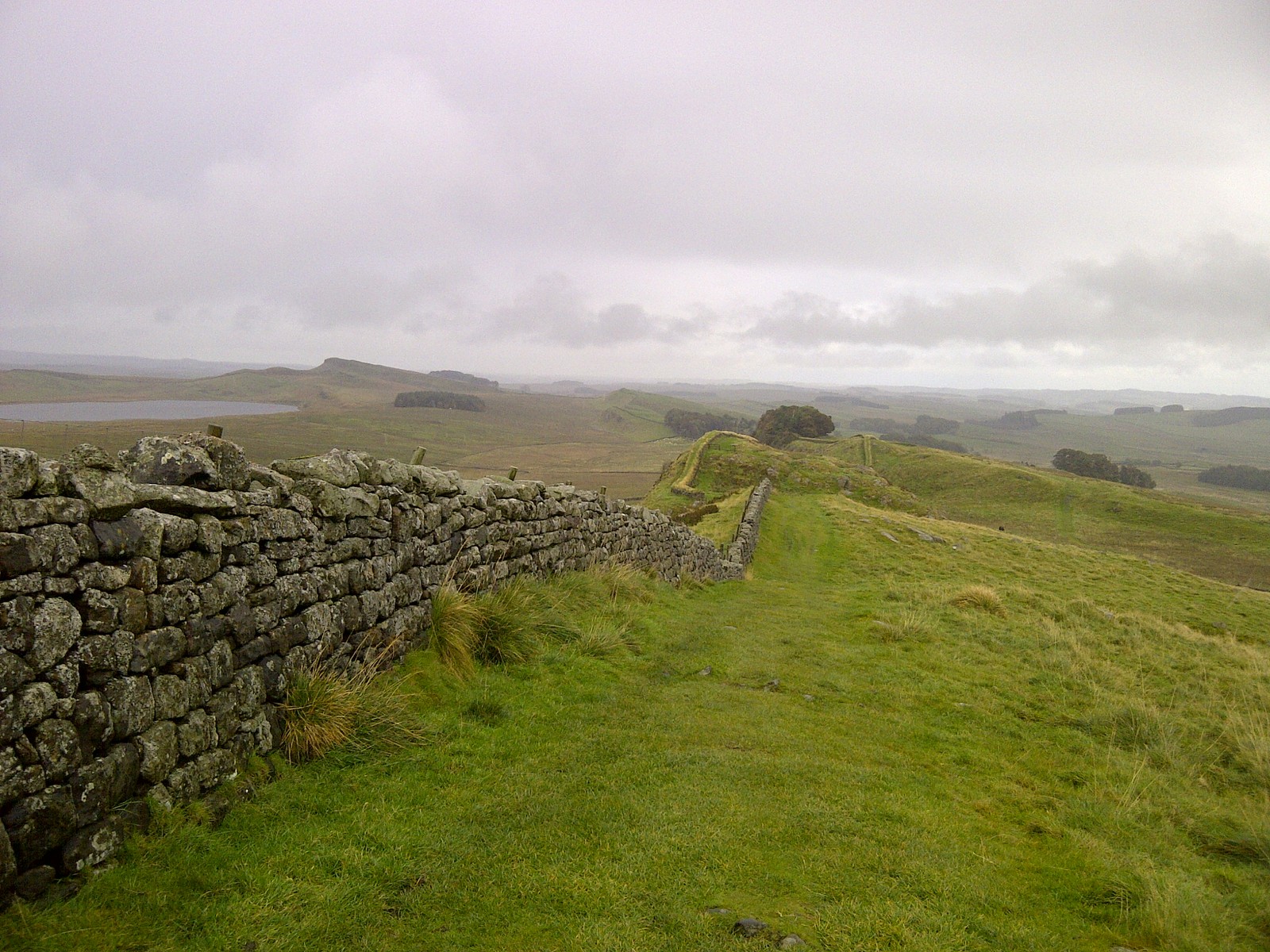
I long ago took note of the fact that people do not want to hear about or read about your triumphs and your wonderful experiences. It's boring. They don't like that. Instead they get far more pleasure out of stories of ineptitude and depravity. So, instead of recounting our successful trek across England along ancient Hadrian's Wall over breathtakingly beautiful green hills I will tell you about the last night of the trip when I nearly got the shit kicked out of me in Newcastle.

Saturday night in Newcastle begins at 11:00 am. John and I were on the second floor of "The Charles Grey" pub overlooking, appropriately enough, Grey's Monument (yes, that's the Earl Charles Grey of tea fame) for an early pint and lunch when we overheard a heated discussion between the barman and a young gentleman who was, as the English delicately put it, "in his cups". He was being refused service because of his state and he did not like this. The young man stormed off. A few minutes later a customer came in and told the barman that the fellow who had just left was pissing in the stairwell. Remember this is 11:00 in the morning. This was an omen.

After an afternoon of taking in the sights John and I ended up at the "Crown Posada" in the heart of the city, off a small cobbled lane. We had asked Maxine, the owner of our B&B, for pub recommendations. She listed off a few places that we already knew to be of the glass and chrome and sparkly lager variety so when we described in more detail what we were looking for she smiled and nodded and said, "Oh, you're looking for an 'Old Man Pub' then!". I guess we were. The Crown Posada is a classic old man pub, perhaps one of the very best I've ever seen - all dark wood, leather banquettes, pressed tin ceiling, gleaming brass and, best of all, an old record player spinning blues, jazz, deep cuts from The Who and The Stones. Packed, loud and friendly. And the only place in the centre of the city where someone over the age of 25 feels at home on a Saturday night.

Why do I make that last statement? I make it because starting at around 7:00 pm the streets increasingly filled with people between the ages of 16 and 25 until it was only them and there were thousands of them. They fly in from all over Britain for this. Seriously. Despite the single digit October temperatures every last girl/woman out there wore an ultra-miniskirt, low cut blouse and very high heels. Every. Last. One. No exceptions. And every last boy/man wore designer jeans and a two sizes too small t-shirt with no jacket. Every. Last. One. It was bizarre. It was like being on a movie set. The only exceptions were John and I and the police. The cops stood inconspicuously down side streets with their distinctive yellow safety vests and checkered hat bands. They stood very quietly, watching, listening. As the evening went on the crowd grew louder and wilder and unsteadier. You could begin to hear glass being broken by about 10:00 pm and the general shouting gradually ramping up into shrieks from the girls/women and bellows from the boys/men.

John and I ducked in and out of the Crown Posada while this was going on. It was like stepping back and forth through a magical portal between two entirely different worlds. The last time we stepped out, sometime shortly before midnight, I found myself suddenly facing one of these bellowers.
"Oi! Yee 'Merican?"
I glanced around quickly to make sure he was bellowing at me.
"No, Canadian."
He was moving into chest bump position with his two sizes too small grey t-shirt. I could see that his eyes were bloodshot and his arms were pink from the cold.
"Gan canny r ah will dunsh yer heed!"
Or something like that. He may as well have been speaking Latvian. The combination of accent and liquor had rendered him incomprehensible. Regardless he looked very irate and was clearly winding up to put the boots to me.
"Ok, it's cool man," I chuckled and smiled. This only enraged him further.
His wobbly girlfriend then began tugging on his shirt sleeve and managed to pull him off in another direction. He obligingly stumbled along, but not before looking back and shaking his fist at me, "Fook off!!!"


John and I made an impromptu decision to head to the end of the street and grab a cab. We were about the climb in when a girl/woman came stumbling up shrieking "I need this cab! I need this cab! Please!!" The cab driver looked at us and mouthed "no" very clearly, his eyes wide, his head shaking slowly. We elbowed the shrieker aside and got in. We locked the door. The cab accelerated and the shrieks and bellows faded away.
"Another Saturday night in Newcastle," the cabbie said.


Wednesday, December 19, 2012

Regarding the Dunce Cap

The other evening my 10 year old daughter called my 8 year old son a dunce. Like most siblings, insults between them are routine, but I was surprised by the use of the word "dunce". I had assumed that it had long ago quietly dropped out of modern English usage along with other quaint insults such as "nincompoop" and "dunderhead".

Duns cup helps with concentrationThis then got me thinking about dunce caps. For those of you too young or too innocent, dunce caps were tall conical hats with a "dunce" or simply "D" written on them that especially slow or misbehaving children were forced to wear while seated on a special stool in the classroom as a kind of shaming. Although I was in grade school long enough ago to have had a school principal who actually kept a leather strap in his desk drawer that he was not only legally permitted to use on children but positively encouraged to, I was at least a couple generations too late for the dunce cap.


So where does this curious custom come from? The word dunce itself derives from the 13th century Franciscan monk and great philosopher, John Duns Scotus, who in turn is named after the town of Duns in Scotland where he was born. His followers were known as "Dunsmen" or "Dunses". Scotus was also known as "the Subtle Doctor" and his philosophy was so subtle as to be exceedingly difficult to follow. Regardless, it remained well respected and even popular until the 16th century when it came under heavy attack. The Dunses were derided as hair-splitters and eventually lost favour. In the process their name became associated with idiocy. So far, so good, eh? Dunsmen = Dunses = dunces = idiots. But what about the funny hat?

Here then is the interesting bit. John Duns Scotus believed that wearing a tall cone would allow knowledge to flow down to the wearer's head, with the pointy bit representing the pinnacle or apex of knowledge. Dunsmen consequently wore them and the hats too became, perhaps not unfairly, associated with idiocy. Duns also theorized that the hat would help the wearer focus. Fast forward 700 years and dyslexia researcher Ron Davis decided to try putting pointy conical hats (presumably not calling them dunce caps) on dyslexic children. He then asked them to concentrate on the unseen point above their heads and gave them something to read that they had previously been unable to. You know what's coming next. Yes indeed, the pointy hat wearers could now suddenly read.

John Duns Scotus was sainted by Pope John Paul II in 1993.

I wasn’t looking for trouble, it came looking for me

Tuesday, July 31, 2012

Don't Order The Bacon


Batad was worth the effort. It was worth the twelve hour bus journey during which we were subjected to incredibly loud movies on video inexplicably featuring boy scouts being slaughtered with pump action shotguns. It was worth jostling up the mountain in a sidecar which constantly threatened to disconnect from its motorcycle and send us cartwheeling deep into the ravine. It was worth struggling up through the humid jungle from the motorcycle drop-off point to reach the high pass above Batad. It was worth all this distress, stress and sweat because Batad is no like no place we had ever been. 


Batad is a small village on the main Philippine island of Luzon and what makes it like no place we have ever been is that it sits at the bottom of vertiginous amphitheater of ancient rice terraces, cut off from the outside world by jungle and mountains. Only footpaths lead here and there is not nearly enough flat land for even the most psychotic pilot to land on. When we finally reached the pass and pushed aside the giant wild poinsettias we looked down on a Filipino Shangri-La, a hidden world of a thousand shades of green, gentle people, absolute peace and, as it turned out, hungry pigs. But more on that in a moment.

There was only one place to stay in the Batad valley, a small guesthouse about two thirds of the way up the valley's side. There seemed no more idyllic place in the world than the guesthouse deck looking down on the village far below and out over those incredible rice terraces. Noise was limited to chickens and, well, that was pretty much it. The stillness was uncanny. As was the darkness at night. The guesthouse and a few of the houses down in the village had generators but as fuel had to be humped in over the pass on someone's back, generator use was limited to about an hour after sunset at the most. After that it was dark. Very dark. The small flickering kerosene lanterns down in the village looked so much like the stars above that one had the disorienting sense of being suspended in the middle of outer space. With chickens. 


Our accommodation was comfortable but far from luxurious, notably with respect to the washroom facilities. We did have a sink in the room but the toilet was an outhouse. And what an outhouse. I have already mentioned that the major feature of this guesthouse was its fabulous view, well apparently the owners thought that no opportunity should be passed up to enjoy this view so the outhouse had no front wall facing the valley. It was situated in a patch of jungle on stilts, suspended over the next terrace level below. You approached it from behind, gingerly picking your way along a path that skirted the edge of the terrace, and then you sat there wide open to the valley. Only birds were able to look at you as the terraced slope in front fell away so steeply.

We got oriented to this curious arrangement during the day and came to quite enjoy it. Nighttime was another matter though. Even with a flashlight in hand it was more than a little unnerving to head down the jungle outhouse path in the pitch dark. But, my digestive system being in another time zone, one night I had to made my way over there. I was just getting ready to do what I needed to do when I heard an unexpected sound. It was a sharp rustling in the bush directly below the outhouse. As I mentioned, this place was normally utterly silent, so I was surprised. 
This was no chicken. 
I strained to listen. 
After a moment's quiet there was a crashing noise immediately beneath my toilet seat so sudden and so loud that I think I must have jumped up and let out a little yelp. I couldn't imagine what was under there. And, more to the point, why it was under there. Before full scale panic could set in I heard another sound. A grunting sound. A soft guttural grunting sound. 
I knew this sound. 
I pointed my flashlight down through the toilet hole and sure enough, there it was. 
A pig's snout. 
A pig's snout pointed up. Mouth partly open. Grunting. Happily. Expectantly. Eagerly. Hungrily.  

Yes indeed, we confirmed the next day that it was true. This was how they fed their pigs. And there was bacon on the breakfast menu. We did not order any.


Wednesday, April 11, 2012

Oatmeal and Shantalope


Two winters ago we rented a house with friends on the tiny Caribbean island of Cayman Brac. Choosing a rental house always involves weighing a number of factors including price, location and amenities. But for us there is also a fourth factor: livestock. Not every house we have rented has had livestock and in fact some of the very nicest ones have not, but we still gravitate to the listings that include barnyard animals.

We all agreed that the house on Cayman Brac scored very high on price, location and amenities and, moreover, it had chickens and a pig - a pig named “Oatmeal” - so it was perfect. The house was booked and we began counting the days.

Renting a house with a pig was exciting enough, but renting one with a pig that had a sweet, cuddly name like Oatmeal made the kids delirious with anticipation. We had no sooner pulled up to the house in our rented van when the kids went tearing around the paths in the large garden looking for Oatmeal. We sauntered along behind, taking in the perfumed air and the marvelous tropical colours when we heard a loud crashing sound, like a car hitting a tree, immediately followed by the kids shrieking. 

Oatmeal was in a pen with a high solid fence. Oatmeal was about 300 lbs and was flinging herself against the fence in a kind of blind rage. The fence was festooned with signs indicating that Oatmeal was not to be touched, fed or otherwise interacted with. She stared at us with evident loathing, flecks of foam dripping from her lips. 

We avoided Oatmeal after that and contented ourselves with the far more agreeable chickens until one day an elderly local man showed up on the property.

"Hallo!” he greeted loudly, flashing a gap-toothed smile.

“Hello!”

“I am here to see de pig.”

“Uh... Ok...”

“My name is Shantalope.”

I blinked, unable to formulate a quick response to that.

“An' I sold Joanne dat pig when it was jes a wee one. I jes want to see how de pig is gettin' along.”

I stood up, introduced myself and led Shantalope through the garden to Oatmeal's pen. Oatmeal went beserk again, charging the fence head down like a demented cartoon rhinoceros. For her size she was lightning quick. Shantalope took a step back, scratched his chin and chuckled.

“Dat Joanne, she was treatin' de little pig like a baby. Walkin' it on a leash an' kissin' it an' spoilin' it! Now look at it!”
Oatmeal charged the fence again, making an appreciable dent in it.
“Oh dat pig be cross! Dat pig be very cross!”
Shantalope laughed and shook his head.

“I tole Joanne I buy de pig back. I tole her I give her a new little one, but she still want dis one. She still love dis one.”
I nodded and looked at Oatmeal, doing my best however to avoid eye contact as that seemed to enrage her the most. Oatmeal took a break from trying to kill us and turned around. Shantalope cocked his head and looked at her hindquarters in an appraising sort of way.

“Oh mon, look at dem hams!”

He made a universally understood cupping motion with his hands, narrowing his eyes with anticipated pleasure.

“Oh dem hams, just tink of de good eatin' from dis pig!”

We began walking away as Shantalope switched to regaling me with tales of all the very fine girls he knew in Montreal when he was a sailor. I could hear Oatmeal raising a ruckus behind us again, but I didn't look. I was thinking, I was in a much better position to empathize with Joanne's dilemma than Shantalope was, but he was right, those were some splendid hams.


Wednesday, April 04, 2012

Venice In Four Hours Or Less


This is from the "archives" - written ten years ago about something that happened twenty-five years ago...

There is something about the magical power of a Eurail pass that causes it to burn in your pocket, like a gleaming quarter handed to a four year old. You want to use the thing and you want to use it often. The side effect is that all this moving around leaves very little time in each destination, but in fact this need not be a problem at all, as my friend Mark and I demonstrated one summer. We had already dispatched with Paris and Nice in a matter of a few hours each and were now rolling towards Venice.

         The approach by train into Venice is only remarkable in its profound dullness and in that it gives no hint whatsoever of what is to come. However, the minute you step out of the front doors of the train station, you know where you are. Rather than the usual frenzied Italian scene of buses and mopeds and honking and fumes there is a great sweeping set of broad stone steps leading down to the Grand Canal where the vaporetti (water buses) lie bobbing.

         The good fortune of Venice is that its Golden Age of wealth and lavish spending on architecture was mercifully followed by a rapid descent into obscurity, which ensured its preservation, like a fly trapped in amber. These days Venice is of course anything but obscure. Many people are frightened off by this popularity, fearing a nasty theme park atmosphere - a kind of Disney-On-The-Canals populated by cynical locals and sweaty throngs of braying tourists. This nightmare certainly exists in spots, but we found that it could be easily evaded as well.

The instinct upon arrival is to trot right on down those grand steps and make for the nearest vaporetto for a cruise down the Grand Canal to the Piazza San Marco. Infinitely more agreeable, however, is the land-route, which begins at a little bridge a few steps off to the left. There are signs marking the way, but they are small – evidently too small for most people. One minute: those braying sweaty throngs. The next minute: a deserted lane wending between stylishly decayed 15th century villas.

             It took us almost two hours to reach the Piazza San Marco in this fashion and I easily count them among my best two hours of travel anywhere. The route took us alongside slender canals, over tiny arched stone bridges and across a profusion of little plazas and squares. Some of these squares were fronted by grand buildings and churches that were clearly of significance, but others featured only graffiti and scraps of litter spinning in slow vortexes created by isolated eddies of wind. I found the graffiti and litter oddly comforting; an affirmation I suppose that Venice was a real place, not just a carefully primped outdoor museum.

         The signs marking the way were well placed: they were unobtrusive and always put just at the point where you began to wonder whether perhaps you had taken a wrong turn and gone astray. This allowed for a pleasant sensation of mild adventure as we slowly threaded the labyrinth. The stillness of the place was remarkable. There were few Venetians about and fewer still tourists. Those tourists we did meet were invariably middle aged Germans earnestly examining some architectural detail while referring to their encyclopedic guidebooks.

          The midway point of the walk is the famed Rialto Bridge. After the Piazza San Marco and the Grand Canal, this bridge is probably Venice’s best-known feature. Built in 1588 it was the first permanent crossing of the Grand Canal, linking the two halves of Venice. It has a very distinctive appearance with shops running up both sides, backed by tall arches. The bridge is steep enough to require stairs to reach the middle where the shops give way to a pleasing, albeit perpetually jam-packed, vantage point over the canal. Pretty from a distance, up close it is festooned with purveyors of knick-knacks and enough obese tourists to give you pause to wonder whether 16th century structural engineering calculations could in any way anticipate the girth and heft of the average 20th century sightseer. We elbowed our way across and a few minutes later - poof - as in a fairy tale wish: all was peace and emptiness again.

          We ambled along contentedly again until the gradual increase in the number of shops signalled that we were approaching the epicentre, the Piazza San Marco, or St. Mark’s Square. First though, a word about these shops. Evidently there are only three types of businesses in Venice, with each type being roughly equal in prevalence.

Fully one third of the shops devoted themselves to glassware. When I say glassware I do not mean beer mugs and chemistry beakers and other such useful objects, but bizarre coloured baubles and trinkets and exceptionally impractical looking vases. There were scores of such shops, often one right after the other, resulting in an effect that was both dazzling and monotonous at the same time. To be fair, Venice does have a long tradition of glassblowing, so aficionados of demented looking pink and green glass animals from all around the world know precisely where to come, but the backpacker is not well served. Thin hand-blown glassware is about as sensible a souvenir to have rattling about in one’s pack as live quail or unexploded ordinance.

The next third were similarly useless: Carnival mask boutiques. Much as with the glassware emporia, there were scads of these, selling nothing but papier-mâché Carnival masks. It’s a shame really that what was once an appealing tradition has been reduced to a basement rec room decorating standby on the level of the bamboo fan painted with the hot pink tropical sunset.

A brochure describing the Venetian Carnival during the Middle Ages professed rather breathlessly:
Masked courtesans would participate in the most wanton games of lust, and confident of their anonymity would shed all conventional inhibitions. Noblemen, who would normally take painstaking care not to divulge a hint of their sexual preferences, could perform in mask acts that at the time were considered immoral and illegal.”

Cool. Moreover, “Carnival” in those days lasted from December 26 until Shrove Tuesday – over three months! Masking was also encouraged for a period during the fall and again in early summer. Those wanton Venetians. After the so-called Serene Republic (doesn’t seem so serene anymore, does it?) fell on hard times the party was over, both figuratively and literally. Ultimately Carnival was even banned because of an unseemly number of fatal mishaps. I could not find detailed descriptions of these “mishaps”, but it’s easy enough to imagine what transpires when alcohol, masks, wantonness and canals are thrown together. Carnival was revived in the 1970s by the government as an annual one-week fleecing of tourists during February. It is now Venice’s biggest yearly draw and provides an interesting counterpoint to Rio’s now more famous festivities. The Brazilians have stayed true to the medieval Carnival ideals of lust, excess and craziness, whereas, at least according to the ubiquitous postcards of dark cloaked figures with eerie white masks stalking alongside mist-shrouded canals, Venice’s Carnival now looks disappointingly austere and intellectual.

In any case, neither of us were the target demographic for the mask vendors. The final group of Venetian shops did, however, hit the mark. Stationers. Stationers by the dozen. And not, I might add, your standard Office Depot or Staples either. These were dimly lit little warrens, furnished in the darkest, richest wood and crammed full with luxurious cream-coloured velum, bricks of deep red sealing wax, black and gold pens that cost as much as a major appliance and an eye-popping assortment of antique brass and wooden gadgets – everything the discriminating European aristocrat could want for the sprawling oaken desk in his castle tower office. We pawed through these goods, relishing the smells of ink and leather and old wood, but there was nothing either of us could afford. Well ok, I probably could have managed a few envelopes, but when you’ve lusted after an antique desktop globe with a handsome carved wooden stand for $2250, it’s absolutely not possible to be satisfied with anything less.

Evidently anyone in search of a crescent wrench, toilet paper or a sack of potatoes in Venice was out of luck.

We were in the midst of this engaging session of window-shopping when, with startling abruptness, one of the little lanes spat us out onto the Piazza San Marco. There she was, an expanse of cobbles encrusted with pigeon shit, lined on three sides by some rather anonymous looking Renaissance buildings and on the fourth by the unarguably magnificent St. Mark’s basilica. No doubt some of these “anonymous” buildings were actually of tremendous importance, but blessed by our ignorance we ignored them and made straight for the obvious target, the basilica.

Mark was wearing shorts, but had had the foresight to bring a pair of long pants along, so before the guards could pick him up and caber-toss him out onto the square, he nipped around the corner and pulled his long pants up over his already bulky shorts. This gave him the appearance of a man with explosives strapped to his posterior, but that failed to interest the guards and we were admitted without so much as a bored glance.

Now this was an impressive church. St. Marks was the first cathedral we had seen with a strong Byzantine influence. Immediately upon entering we found ourselves in a kind of foyer under a series of domes that were completely covered with gold tile mosaics. This had the effect of creating a roomful of upturned faces and rigorously craned necks. We joined the hundred or so tourists already wedged into this space and gaped awestruck at what was above us. The mosaics had that Eastern Orthodox look about them that one associates with Russian icons, although Venice always has been Roman Catholic. We presumed that the story being illustrated above was that of the virtuous life and abundant miraculous deeds of St. Mark, but it was difficult to be absolutely certain on that point as there was quite a bit going on up there and all the figures wore similarly beatific expressions.

The mosaics in the foyer were apparently just an aperitif - in the aircraft hanger sized main chapel there were acres of gold mosaics in the high domes, on the columns, in the niches, everywhere… The altar-screen was something else too - it was entirely encrusted in jewels and enamel icons. Apparently St. Mark himself, or at least some representative sampling of his body parts, was here somewhere too. His original resting place was Alexandria, Egypt, but two enterprising Venetian merchants dug him up and smuggled him here as, much in the fashion of modern boomtowns that lure sports franchises from more stagnant cities, they felt that their up-and-coming town deserved an A-list saint. We meandered about for a short while like stunned cattle and then, suddenly overcome by a powerful craving to buy souvenirs, made for a stand we had seen in the foyer. This was a restrained and tasteful affair – no Pope-On-A-Rope or “To Hell With Satan” t-shirts here, only books, postcards and a few small curios.

Disappointed, we wandered back out onto the piazza. Mark still looked like he was trying to shoplift a tablecloth, so he took off his long pants and then we set about the serious business of getting the requisite pictures of each of us feeding the pigeons in the middle of the square with St. Mark’s Basilica forming the scenic backdrop. We didn’t actually have any food for the pigeons, but not being possessed of an especially keen intellect they allowed themselves to be faked out repeatedly until we got a few nice shots.

Although the basilica is clearly the star of the piazza, one’s eye is also drawn to the bell tower associated with Doge’s Palace, one of the otherwise undistinguished buildings marking the perimeter of the square. This tower is quite tall and its pointy roof dominates the Venetian skyline. It stands just kitty-corner from the basilica and is traditionally something a visitor would climb in order to gain a view of the city from above. We looked at it for a moment and reflected on how ridiculous the word “Doge” sounded, like a six-year-old boy saying “dog” when he’s in a silly mood. In fact it’s just “duke” in the local dialect, but considerably more fun to say.
Mark looked at me, “Doge.”
“Doge,” I shot back.
“Doge!”
“Doge!”
“Double Doge!”
Well, you get the picture. And with that our time was up. The tower was going to be too expensive to climb anyway, so we trotted down to the dock and located a vaporetto headed in the direction of the train station.

The profusion of boat traffic on the Grand Canal created a disagreeable chop, so the boat rocked perilously as we tried to jump aboard. The engine sounded like a concerto of one hundred chainsaws with guest accompaniment by a quartet of wood-chippers. I had actually been looking forward to this ride along the Grand Canal as a scenic cruise of sorts to cap our visit to Venice, but the sickening motion, the noise, the nasty fumes and the fact that we were packed in like Tokyo subway commuters diminished the pleasure somewhat. I spent the trip wedged in such a way that my view was dominated by a man’s right ear. It was an outstandingly hairy ear and as such was mildly interesting, but I am confident that I did not need to go all the way to Venice to see that. Otherwise though, the trip had been entirely worthwhile. Four hours in Venice and, to quote Sir Edmund Hillary, “we knocked that bastard off”. Next stop Vienna; it’s bigger, so maybe six hours?